A Quiet Passion (d. Terence Davies)
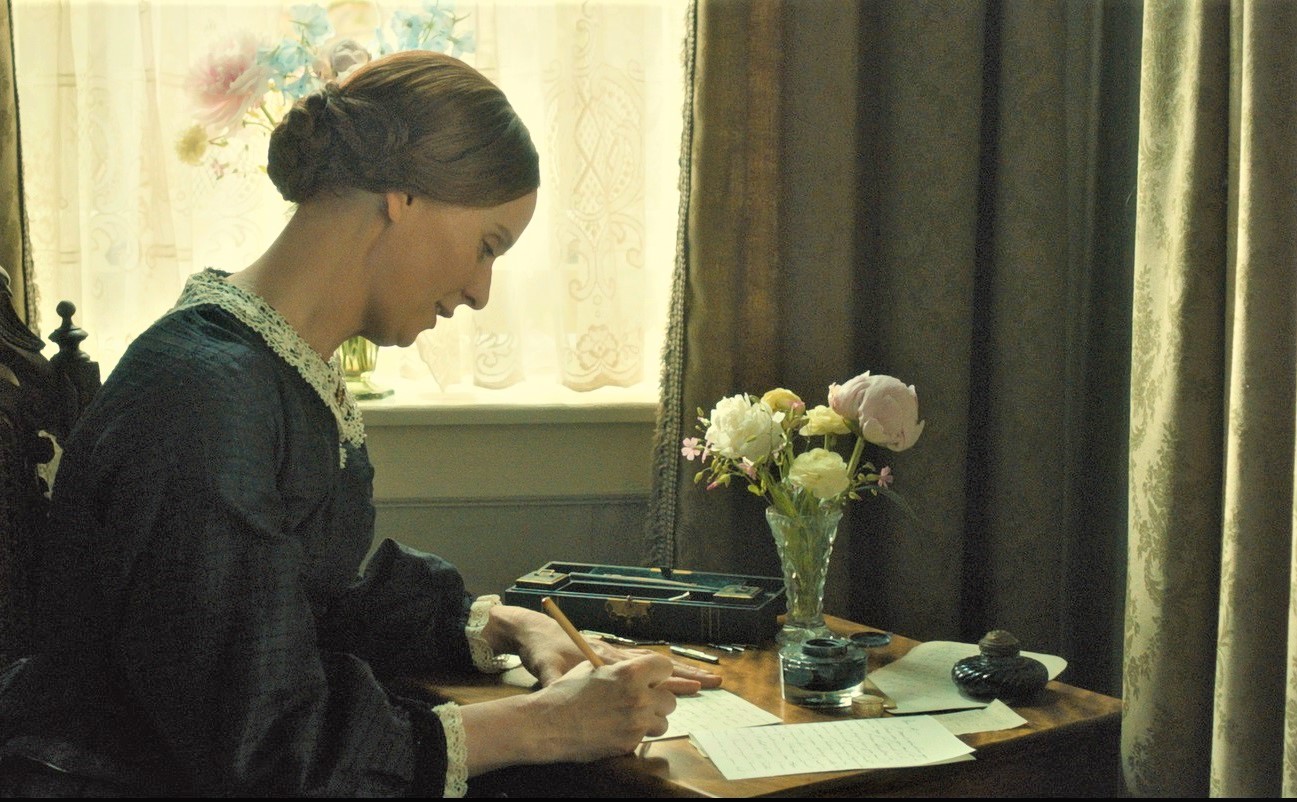
It’s not that I don’t like it or that I don’t care much for it because I do, however, it’s also deeply problematic and is no different, ideologically, from recent films about the American past and it’s grip-like insistence that only white trauma matters.
Davies, a deeply Catholic fella whose faith informs his films, treats Emily D. as a saint. It’s refreshing to see the poetess represented as catty, witty, Unsexed in the Prairie. What’s un-refreshing and recycled is Davies’ journey of redemption in his work where suffering begets liberation and desire, unrequited, frustrates the soul to its deepest depths. It’s not the most comfortable sequences, the way Davies renders of physical bodies in pain. Back in the day, consistency of artistic themes and stylistic ticks were referred to positively as auteurism. These days, I prefer to call these things white privilege as most white filmmakers never seem to unlearn or inspect their privileges and racialized imagination.
Davies shows Emily D. as woke when it comes to slavery. But it’s also the same Emily who equates her gendered status, as a white woman, to slavery. Excuse me, Becks but, really? Really? And then there’s that line towards the end where she goes “why has the world turned ugly?” based upon her brother’s infidelity. Well excuse me, Becks, but the world, and your world, in particular, has been especially ugly. Isn’t it also interesting that she and her family are constantly holed up in their nice prim house where we conveniently don’t see any slaves or ex-slaves or any labor for that matter. Once, “employees” of the house are shown, and Emily ends up apologizing to them. How very Roma (that patronizing film about the indigenous help)! Isn’t this the same scenario as Beguiled, where white women are holed up in a house and where the film just avoids the topic of slavery altogether despite set in the South at that time period?
While Emily D., like an Austen heroine than the Bronte sisters that she mentions and obviously admires, wrestles her personal and ethical questions, I kept thinking what about the suffering and ethical entanglements of others, especially enslaved women, where are they? Why don’t they get screen time. Even though the film sensitively and poetically shows us the life of a great American poet, sometimes we want to see the heroic or perhaps not so heroic undertakings of American nobodies.
#2019 #30
 Orpheus in Hell: Unlicensed Film Reviews