Bitter Melon (d. H.P. Medoza)
Searching (d. Aneesh Chaganty)
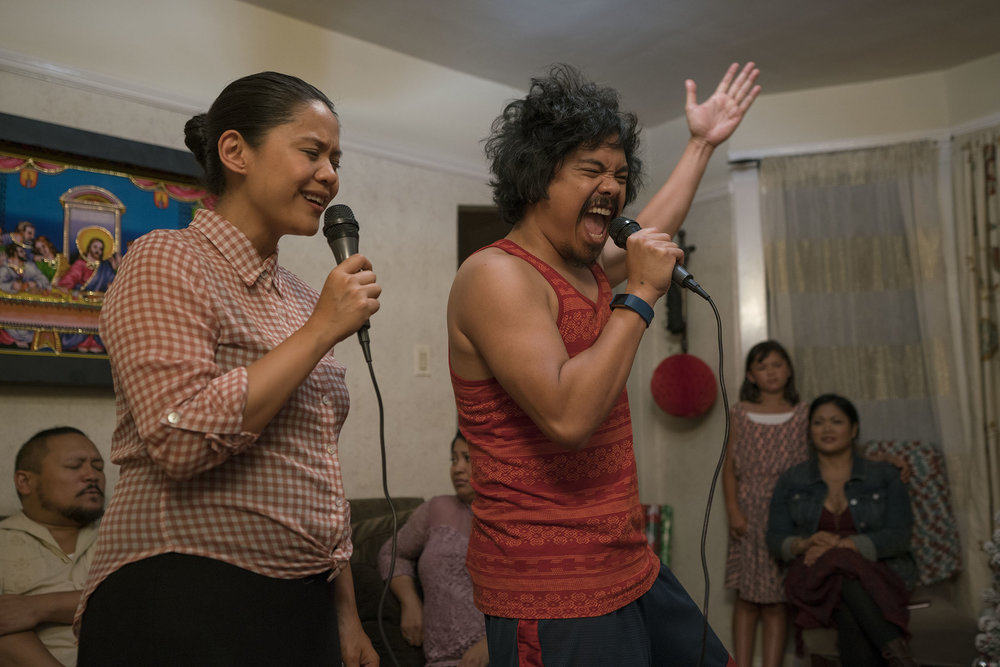
Bitter Melon is a comic and rather dark take on Filipino-American life in Nor Cal’s South Bay Area. What is most surprising about the film is that it shows Asian immigrant life that doesn’t revolve around whiteness or being white or assimilating to be white but one that was confident in being Filipino and (first generation) Filipino American. Life partners and pals tend to be fellow Asians or African Americans and the only time we get to see a white figure is during a brief gratuitous sex scene of a gay Asian character topping a white dude. As I said, it’s a gratuitous scene BUT almost necessary since it flips the script of gay Asians as perpetual bottoms. There’s a teased secret that the Filipino mom doesn’t approve of a son’s wife because she is Black, but it turns out it is something else that was of concern. Stretches of dialogues are not even in English or Filipino but a northern dialect. And finally, and this one kind of hits close to home, is the problem of patriarchy and toxic masculinity that lurks in some Asian and Asian American families. One of the sons is a wife beater and the film slowly reveals the mechanism that was put into place for his behavior and those of the other sons, who have had drug and psychological issues in the past. The final reel of the film deals with this and I think the director does a good job of showing the audience if we are to take what transpires literally or metaphorically. Film deals with all this with great humor, from the goofy yet sinister karaoke sing-a -longs to “depression is for white people” which is first told as a joke but becomes a long-standing issue of Asian immigrant families’ inability to deal with mental health issues. It’s a mature and confident work expressing an aspect of the Asian American experience that deals with the darker aspects of living in immigrant America.
Searching really does work in a few ways: good search movie; good use of computer screens, cell phones, and social media to tell a story; great to see an Asian guy be the hero in a Hollywood flick. Besides all these, the movie is about assimilation, more specifically assimilation of an Asian American family into a largely white American society. When the dad scrolls through his and his family’s contacts, one sees names written in English and Korean and Korean-sounding and Anglo-sounding names too. Race isn’t mentioned in the movie even though it tries to gingerly deal with it. How? As food. Food in place of race is the shallowest signifier of multiculturalism. And here, though it’s meant to be funny, it’s called kimchi gumbo, which is the movie’s equivalent for melting pot. Even the Amber Alert doesn’t specify race of missing girl—which is ludicrous. There is a black girl and a Latino looking guy but the movie doesn’t want us to identify them racially even though they’re there for those reasons. My takeaway from this film is that the proper Asian American narrative, especially those who are first gen or whatever gen, is to have this superficial racialized identity (just talk about food) and polite enough not to mention race in mixed company. Because if you do so, you might end having an empty funeral service.
 Orpheus in Hell: Unlicensed Film Reviews