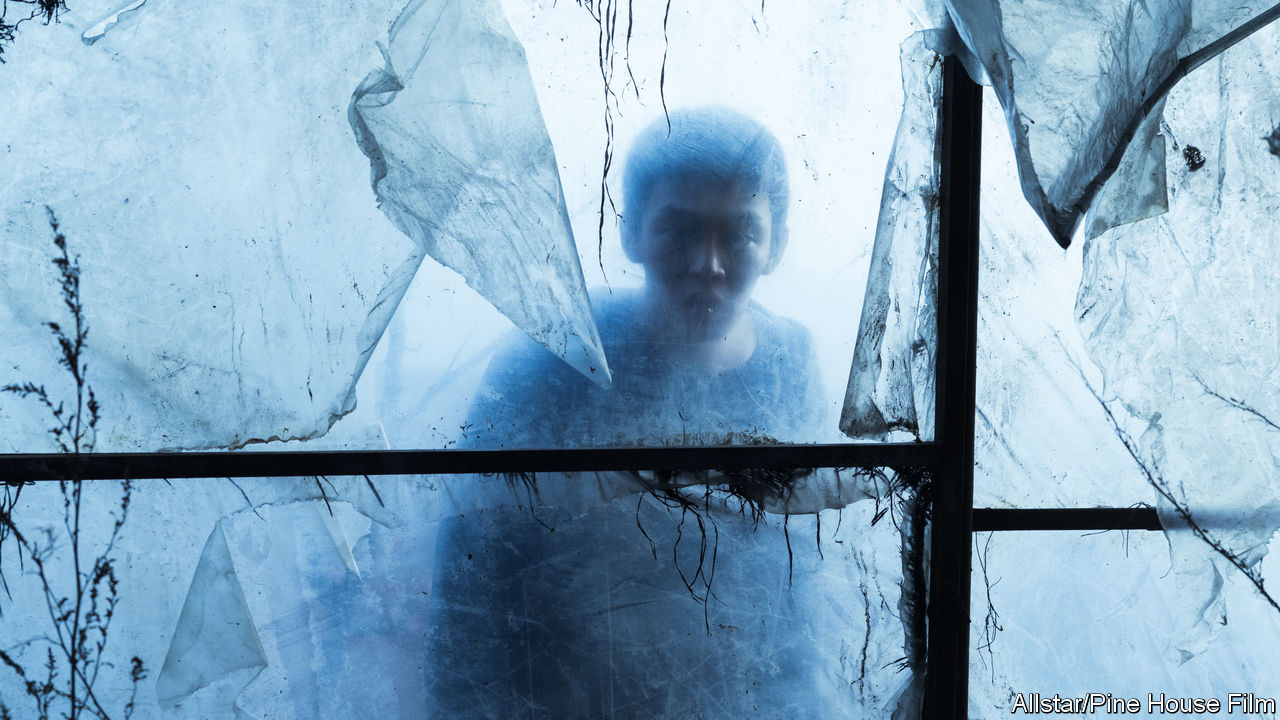
What’s actually burning? Resentment at the rich? Yuen’s casting may also suggest the anger directed at Korean immigrants who made it good, actually so good, that they’ve been flaunting their successes back in Korea. He yawns at the boredom of his latest entertainment, women usually below his class and women who are insecure. And then at the heart of the film is the dance of the Great Hunger. Lee makes the yearning for more-than-this-life sentiment at the border of North and South Koreas, indicating that the reunification is also a yearning, hidden or not, among his countrymen. But he also has the rich man there which means it’s not just a question of reunification of geographical boundaries but also those who have been dispersed in the Korean diasporas. There’s an impossible spatial sequence in the film where the young writer is looking at images of militarism and protest while a few yards away, his rich counterpart is dining with his family. There’s a suggestion that the conversation about family is audible, which doesn’t seem possible. It’s yet another boundary within Korean society, the rich and the rest. What is the film doing? Or what is it burning to do? Two possibilities. One, miming. Second, actualizing. (Third could be dreaming.) Is she, the third protagonist, been miming all along indicated by the well story? Lee also places the onus on working class Koreans when the sister tells the writer that she can’t come home until the debts are paid. That’s cold. Then we get the shot of him finally writing. Is it yet another petition? Doubtful. It’s after this shot that the film turns truly scary and heartbreaking: the writer, bumbling, sensitive, thus far, turns to murder. The film seems to suggest that for the writer to achieve or surpass his Great Hunger he has to eliminate someone who may or may not have killed the young woman. The turn of events is not surprising especially in contemporary Korean cinema with its great revenge stories. This is his revenge moment, this is the another revenge movie, but what in fact is being avenged? Childhood trauma? National history? Economic disparity? Not having read the Murakami short story to which this is based, I can only assume it is about the usual Murakami anomie, but for Lee, the stakes are higher, it’s national AND global. It’s a very bleak portrait of our times.
#2019 #18
 Orpheus in Hell: Unlicensed Film Reviews