You Were Never Really Here (d. Lynne Ramsay)
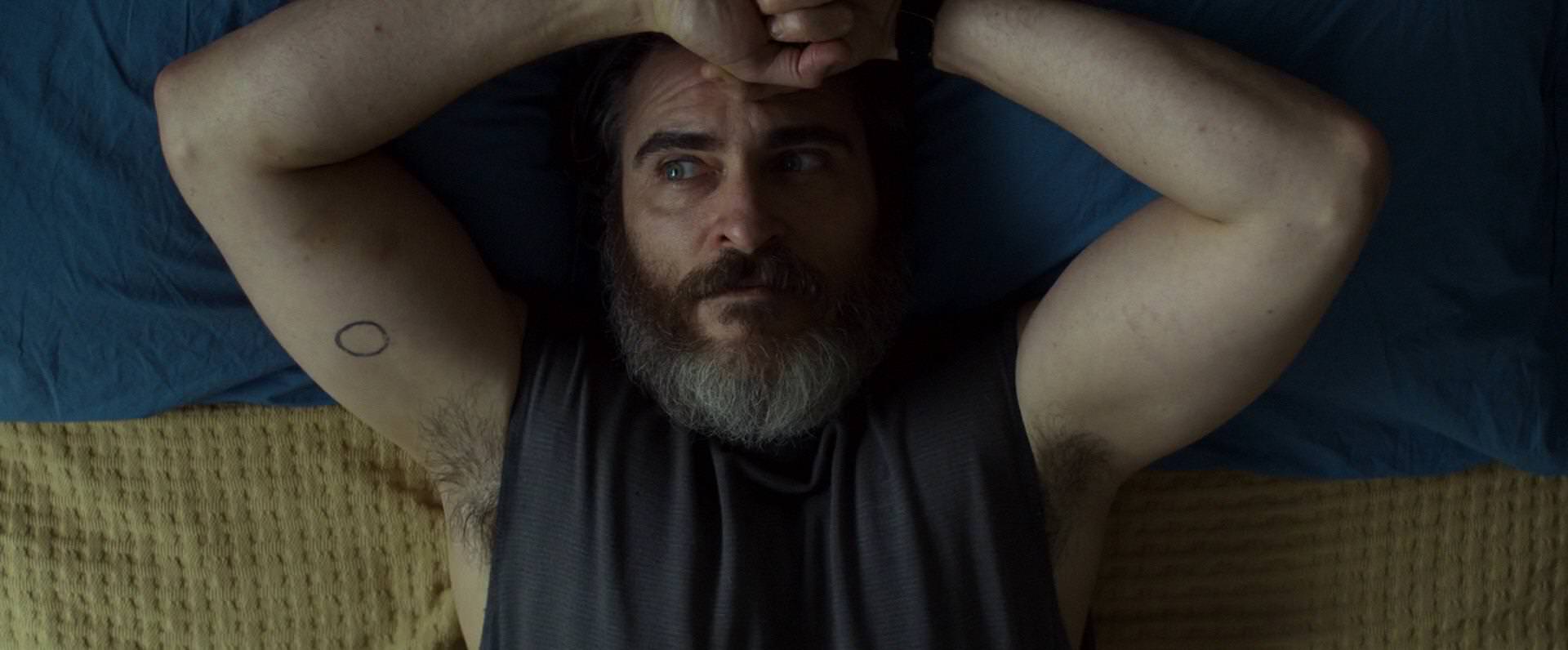
Lyrical retelling of Taxi Driver, to some extent. Ramsay’s NYC is also USA circa present day. The interiors are all wood paneling, a throwback to when things were more secure only to be told in flashbacks that things were never that great. Joaquin does the embodiment of the the crushed, sensitive, tough and violent straight American male, and here he’s heavily, heavily traumatized. In fact, the weight that he carries is not just personal, but national, with images indicating the ramifications of the Iraq War and illegal immigration. The movie works largely because of Ramsay’s use of sound design to create a nightmarish world of everyday violence. What I somewhat object to is the idea that it’s the white straight male who carries the burden of American civilization in the way Joe is impossibly traumatized by multiple traumas. It’s something I also detect in another recent film, The Rider. Why this obsession with white male trauma when, if you look at the news lately, it’s pretty obvious black men and women and other minorities who are the subjects of state sanctioned violence and who are the ones deeply traumatized. Where is that representation? Where is that representation within these films. In fact, Ramsay’s movie is no different from the usual Hollywood product where those in need of protection are young white girls. It’s their innocence that is at stake. How far is that from Birth of a Nation’s Lillian Gish’s fears of being raped and where the KKK riders are on their way to protect her from black men? It’s not much different. For decades, American society has been under economic assault for decades. For white society, their response has been to go after minorities and immigrants for their change in social status, because it’s the easy and less intellectually taxing to do so, what with conservatives fanning the flames, that it’s these other people who are making them poor or marginal. I feel that the movie, whether it likes it or not, is in line with this kind of thinking except that it’s artistically done. Like The Rider, we are made to sympathize with the broken straight white male while the rest of us, our pain complaints and fears, are ignored, unseen, disregarded. There’s even a shot of a young Asian woman in tears, but her pain is disconnected from anything in the movie. However, later, it’s revealed it’s his pain that motivates the image. White man’s burden trope as it’s finest.
#2019 #15
 Orpheus in Hell: Unlicensed Film Reviews