Female Student Guerrilla (d. Wakamatsu Koji) (1969)
Dare to Stop Us (d. Shiraishi Kazuya) (2018)
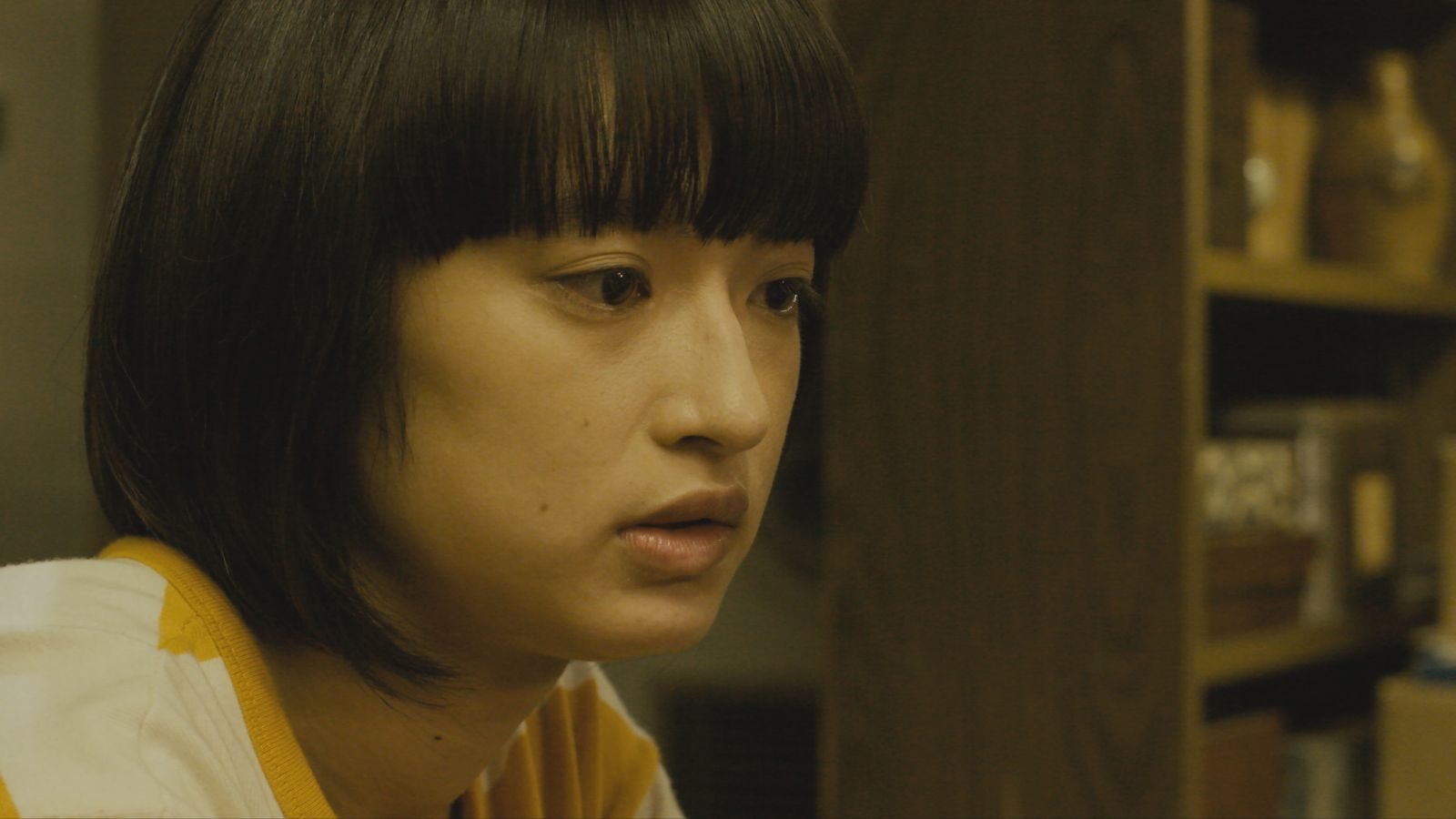
Dare to Stop Us follows the brief period of collaboration known as the Wakamatsu Pro (productions) between Wakamatsu and Adachi. The focus is, surprisingly, on a novice female production assistant who quickly wins over the respect of Wakamatsu-san, portrayed as a hippie asshole, and rises through the ranks where she is given a film project of her own after two years on the job. It’s a short film that was supposed to be incorporated or repackaged with another film to be offered to a commercial studio. Wakamatsu, ever insensitive to his protege’s feelings, dismisses the end result as the other team members muster some words of admiration to spare the feelings of the lone female film director in their midsts.
The most interesting aesthetic decision that Dare to Stop Us makes is to forgo a strict period piece look. Right from the very start, it shows Megumi, the novice, and her recruiter walk through a very visibly contemporary Tokyo despite the subtitles indicating that the action is supposed to be set in 1969. This choice has the unnerving effect of showing continuity between the past and present conditions of being a woman in Japan, one who is artistically inclined and independent-minded enough to do what she wants to do. I thought she was a fictional character until the end credits where they show actual photos of her that were recreated in the movie. So this is where I’m a bit uneasy with the film because it shows that ultimately a woman cannot do these things, artistic and have a career, because, like Megumi, she will not find the balance, courage, support, freedom, choice, etc., because such a woman will die or will have to die as Megumi commits suicide.
According to the movie, she was pregnant at the time of her death; She was also in a relationship with a co-worker and an unstable one with her biological mother. The film could have dealt with her situation in a different way, I think. It could have been more vague as to the connection between her failed love and family life and her suicide. Instead, the movie shows that women are incapable of handling their own life issues, what more a career? Additionally, what is distressing is that someone like Megumi has no viable social and mental space within and outside of her.
In short, the movie, which shows the lives of rebel filmmakers, is itself not critical enough about social and material issues when it comes to women. The rebellious tone of the title then is only limited to the men in the movie. Megumi wants to partake in a peeing contest that is a running joke in the film. She is restrained in doing so and not just because biologically. In fact, the movie says that for Japanese women to dare the impossible, they will be stopped in their tracks. Because of baby. Because of limited options. Because of the asshole-ry of patriarchy.
The Wakamatsu film is failed politics. While there are female student guerrillas in the movie, there are three horny male rebels too. The movie follows a group of high school students who sneak into their school to steal everyone’s diplomas days before their graduation and go play teenage rebels in the mountains. What Wakamatsu and Adachi (scenarist) had in mind was to express dissent at the state of society through eroticism. But eroticism for who? For the men, yes, but it’s blatant sexism for the women involved. Their offer of free love and sex is equated as a political act. That is so juvenile. A more radical stance would have considered the role and status of women in society but seeing what kind of guy Wakamatsu was in the movie reviewed above, it comes to no surprise. Instead the movie has young women gyrate to pop music topless and fuck an unwilling nationalistic nut job. This kind of exploitation is not so different from the capitalist and nationalist fucks who exploit workers and citizens that Wakamatsu wants to ridicule.
#2019 #115 #116
 Orpheus in Hell: Unlicensed Film Reviews