That sinking feeling

A film about Abenomics and climate change

Weathering With You (d. Shinkai Matoko)

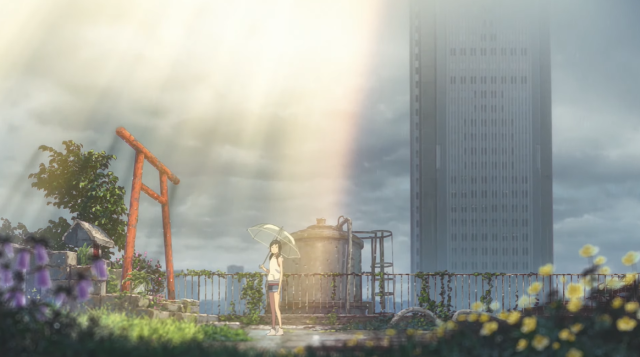
From the director of Your Name (2016), Weathering is far less coherent than the previous film and the new work, despite its attempt at romance, flounders; primarily because the kids are underaged so that something as discreet like kissing elicits anxious sweating. Instead, the film works as a cautionary climate crisis tale.

At the heart of the film is a dilapidated building that incongruously exists somewhere in the middle of Tokyo. (It has been reported that all the buildings and locations featured in the film are based in reality, including said building sans the magical shrine on the roof. I read this structure as the rusting heart of the metropolis; or that this is what the future of Tokyo, and, by extension, Japan’s economic future will look like, in spite of the major constructions in Ginza and Shibuya. The characters have no stable jobs. The adults are working on the fringes of the formal economy. One of the characters wants to go legit, but she ends up being frustrated, interview upon interview. The minors are working too–even further away from the formal sector. She gets fired from her part-time McDonald’s job only to end up in the gig economy.

The weather phenomenon, meanwhile, remains unexplained. It is supposedly to be mystical and, curiously, biological. It is also strange that the weather changes occur in limited geographical areas so that it is Tokyo that sinks instead of other parts of Japan. I can not help but read this as a comforting yet narrow-minded approach to climate crisis: if Japan does the proper things, like recycling, then Japan will be able to control and survive whatever climate crisis will occur on the planet. Instead of a complete breakdown, Tokyo is shown as having adapted to its new climactic (and economic) conditions. Folks still commute to work but now on boats. Businesses can still thrive as the sketchy businessman is now legit. People lose their houses but they’re still able to find apartments in wet, flooded Tokyo. All of these things occurs after the time jump which renders the post-flooding Tokyo as fantasy. Japan will weather not just climate change but also economic changes, the film insists as the protagonists now are of age and can finally kiss without worries.

#2019 #114

Regimented bodies

Just add Black Power

Venom (d. Ruben Fleischer)

Interesting that two movies, Annihilation and Venom, that came out in 2018 have similar imageries of the white human body absorbing aliens without interrupting the integrity of their human physical form, at least outwardly. In the former film, everyone else not white is dispatched to the grave while the sole white heterosexual couple manage to survive the weird alien dance. In the latter, the same thing happens where both white hetero coupling survive the alien symbiote that possesses them, temporarily for the female, while, notably, the supposedly blindly casted but obviously racialized body of the Elon Musk figure is burned alive, meaning to say that figure could not achieve the symbiosis of its white counterpart. A PG-rated movie without blood splatter, another notable aspect is the racialized violence that opens the movie where the Malaysian men in the night market are shown to be pierced, meaning to say bodily broken, unlike he goons in the SF setting who are just clobbered. There is some awareness of race in the movie as the alien inside the elderly Asian woman for some reason knows that she probably won’t be able to get into the US, so it selects the body of a young blonde child. It’s indicative that the alien knows this tiny yet useful bit of info. It’s also a San Fran with just one homeless person and the only Asian person featured is an immigrant rather than an American-born one. The only Latino is a security guard though his kid is going off to the Ivies. No, the POCs in the film are at least a generation behind compared to those who actually populate the Bay Area. It’s telling that a white loser can become a hero with some black power added to his system. Yet another film about multiculturalism pretending to be a sci-fi movie.

#2018 #December

Colonial inheritance

Haunted house films are about displaced colonial settler anxieties

Hereditary (d. Ari Aster)

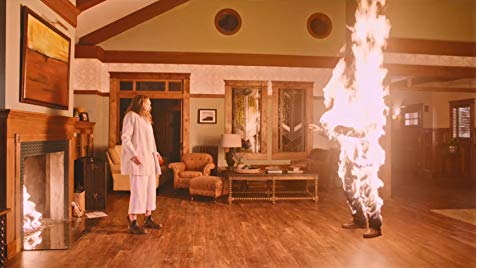
Where exactly does the movie takes place? The miniatures adds to the eerieness and Muriel (1994) + the single mom from The Sixth Sense (1999) ramps up the creepiness. The unlocatability and everywhereness of the film indicates the universal effects and cluelessness of white settler colonialism. The film could be set in North America or Australia and New Zealand. The “evil” is otherized with a book that may be in Sanskrit. “What language is that?”, the white folks keep saying. And evil is also made familiar with the figure of the hysterical woman. The gender politics are more than a little problematic even if the film tries to play it off with nudity of both genders. The taboo of showing a child getting killed is actually offset by the casting of child actress herself. Can you imagine if the kid was pretty? She is perfectly cast because she has the air and look of someone preternaturally older. Even the son has a look that can be read as vaguely white; is he Mediterranean? Latin? His phenotypical appearance doesn’t quite fit in with the family look. His ascension to evil is made easier that way. What’s missing is the colonial history itself since the film does look like it is set in Muriel’s country, Australia. If these are ghosts of the dead, then where are those of the Aborigines’? Why is colonialism not the cause of the hauntings? The death, evil, and destruction of the white nuclear family is displaced to a distant evil when settler colonialism is the destructive force itself. The renderings of the home, miniature houses, and tree house, indicates the enduring idea of settler colonialism and its legacies: wealth, security, home, family, nation. As always, what’s horrific in haunted house stories is the probability of a depreciated property values rather than headless bodies lurking in its attic. The final scene of the cult? They’re praying to Capitalism so they may not fall victims to it even if they already are. Clever horror film except it won’t name the true evils of the world.


#2018 #December

Water sports

Fish have dicks too

Shape of Water (d. Guillermo del Toro)

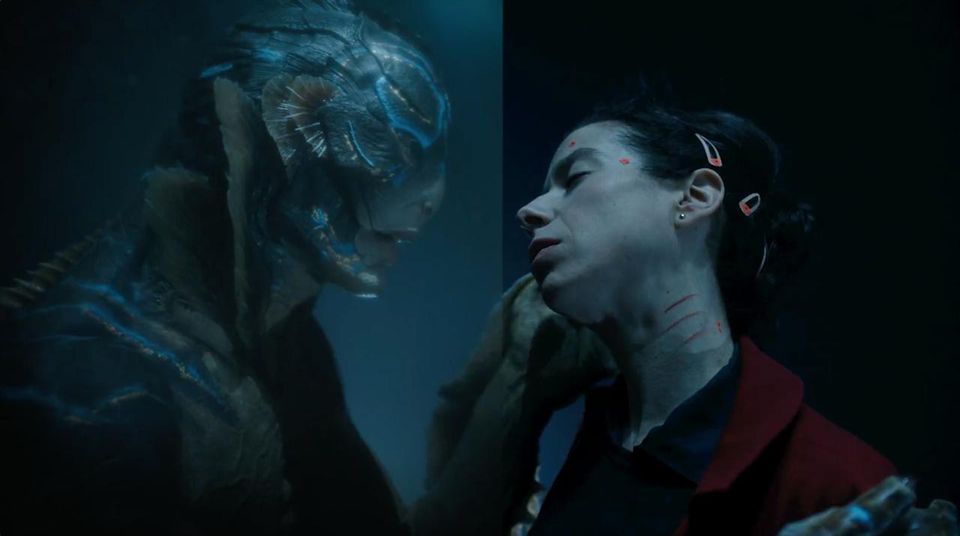
For a poetically titled movie, it makes a vulgar point to spell out the anatomical part involved in the inter-species sexual encounter that the movie might just as well be called the Shape of Penis. The movie is insistently heterosexual in its point of view that Aquaman can fuck a woman but a gay man can spurned by another guy. Its racial politics is just for show like the snippets of civil rights demonstrations shown on the TV while the sassy black woman from The Help is…well, just a help. She constantly complains about her husband that the couple’s representation veers close to the findings of the Moynihan Report. The Alpha Male is also Trumpism embodied. The actor musters and registers the White Rage of the times with a more pointed sexism than racism. His virility is carefully laid out, inexplicably, with an overhead shot of him humping his bare breasted wife (a touch sexist for a throwaway role/shot), and the shot of a young woman admiring his purchasing power. Del Toro needs to build this guy up so that he can pull him down bit by bit. What the director wants to do is to undermine this American triumphalist narrative but he can’t seem to imagine a non-heterosexual and genuinely queer formulation of love, desire, and existence as an alternative. For him, difference is purely appearance. The alien creature may have gills but he has a functioning dick for penetrative sex. The effect is that it’s the non-hetero and non-white folks who continue to be alienated in this fantasy tale. Where del Toro may have succeeded is when he offers a different but still problematic version of America: America belongs to the dreamers; romantics; to those ennobled to self-sacrifice, like the Russian dude; or, as the final sequence indicates, to those who self-deport.


#2018 #March

American snipers

Suicide Squad (2016) (d. David Ayer)

It goes without saying that it’s a terrible film. It is not entirely pointless because it is doing something, which is the placating of underdog sentiments. At one level, the movie is a reaction to the heavily plotted, multi-part Marvel flicks. At another, it is tapping into the Trumpian tendency to get the attention of those who see themselves as the new social underdogs like the anti-hero rejects that make up the superhero team in the movie. Key scene is at a bar where squad members trade war stories. Sniper kills for money, not much different from the film American Sniper, while the pyromaniac has killed women and children, insistently coded as brown victims, echoing the civilian collateral damage from US military forays of the last two decades. Here the tropes of War on Terror culture is linked to the anxieties of the economic and social underclass. Manic Pixie Girl equalizes everyone’s sins by claiming everyone is damaged goods and have blood on their hands. The point is bad things happened and while they may trouble the conscience, they are ultimately justified since these acts were for the greater good: family, country, what have you. Who is the villain in the film? Why it’s the woman with the crescent symbol on her head. Is she supposed to be a stand-in for Islam? Her witchcraft has a weird cosmopolitanism: Meso-American mythology with a British accent and a French last name–the embodiment of a digital money transfer to an off-shore tax haven.

Sold as an anti-hero movie, the soundtrack and stereotypes are appropriately dated. Movie kills of its POC squad members exclusively with un-PC glee. Female members are defined by their damaged relationship to men. The Asian woman is a triple stereotypical threat: she was a dutiful wife; she adorns herself with the rising sun insignia; and she walks around with a samurai sword. She can not even be Asian-American but a foreign Asian; and she doesn’t get the candy-colored backstory given to the other team members. The Native American is DOA while the Latin dude is the stereotypical papi chulo. Amanda Waller may be a strong black female character but she is also characterized as manipulative, self-serving, and pro-military. Condi Rice’s big screen debut. To top it all, it is the white heterosexual couple that gets reunited in the end, which goes to show how the film is ultimately interested in maintaining the white status quo.

The film begins and end in prison. There are huge smiles upon their return to their cells due to some small changes: cable TV and an espresso machine. The fanboys and viewers are also in the same mental space. The awful movie gave them a momentary respite to feed into their disillusionment only to be enclosed back into the grind of mindless productivity and consumption.


#2016 #August

Wolf in Takashimaya bought clothing

Fashionable rebellion

Take Care, Red Riding Hood (d. Moritani Shiro)

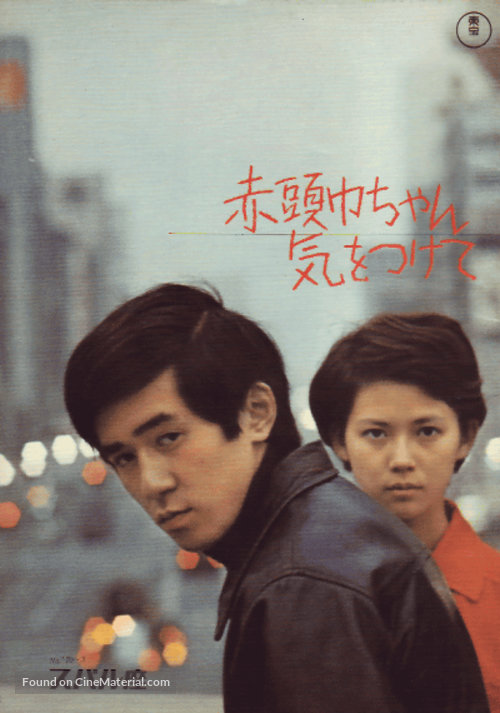
It doesn’t know what it wants to be and it’s not a good movie. Released in 1969, the film follows a college bound student whose plans to begin his studies at Tokyo U is derailed by student protests. The film is so annoyingly classist that it thinks not going to Todai is gonna be the end of the world. It’s also terribly sexist as the women around the young man, including a young child who wants to get an age-appropriate Red Riding Hood book, are there only to explore aspects of his not quite convincing angsts. Even the female doctor is stripped naked for his fantasies, the doctor being the only professionally accomplished woman in the film. A neighboring housewife is insultingly given a bird sound effect because of her endless prattle and because of her attempt at chicness, a feathered hat. We instead get a long, dragged out conversation between the protagonist and his male pal about LIFE. It’s such a bore fest. There are musical interludes for record single releases, I suppose, and a low-key orgy that segues into a jazz song. As I said, the movie doesn’t know what it wants to be. The general tone is that of innocence when it should have been acerbic. The film ends with newsreel footages of student riots, American military presence in Japan, and stylized black and white photographs of nude westerners with just a suggestion of both interracial and homosexual couplings. These things don’t cohere and they seemed tacked on. Released by Toho, why did the filmmakers bother to throw in these images? As a response to independent films, filmmakers, and ATG who were tackling some of the same topics? For me, this undecidability is a sign of optimism. The protagonist decides at the end that he will quit not go to school and make it on his own, which means that he could imagine an alternative from the clutches of school-work-death pipeline of Japanese society at that time. While his girlfriend tries to make out the Tokyo neon signs at night and admires them, he seems nonchalant at the spectacle afforded by the restaurant. He is not to be tempted. He will not stick with the system and the film says that’s OK. It’s something that cannot be said openly these days in an economically uncertain Japan. In this way, this mediocre film achieves a thimbleful of radicalism—for upper middle class Japanese men.

#2019 #112

Nostalgia for a whiter America

Stranger Things Season 1 – 3

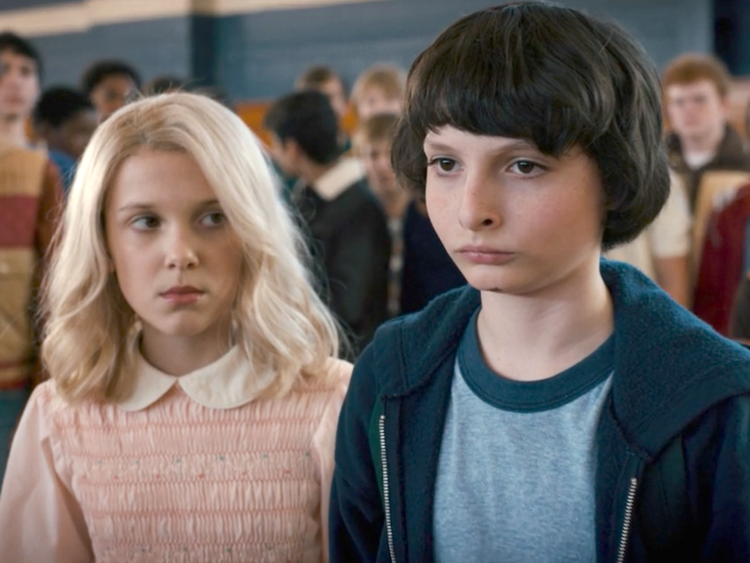
I’ve yet to read someone pointing out the nostalgia for the kind of work and economy that was still possible in the 80s in the Stranger Things series. The Winona Ryder character is a single mom who is able to provide for her two sons just by working at a small-town general merchandise store. She’s able to ask for a few weeks off and she even gets the advance that she demands. This is something to keep in mind since series traffics in nostalgic objects in the form of toys and other goods, such as the Halloween costume the Ryder character is shown to be putting together. (Does this mean that the other kids got their costumes off the rack?) Also, most of the stuff that these people have, from small to big appliances, automobiles, and clothes, were most likely made in the US. I keep wondering if the nostalgia isn’t just in the remixing of various 80s movies and music, but also this longing for an economy that has long disappeared. (An amusing detail in the second season is finding out where one of the characters works: at then popular and iconic Radio Shack which is no longer in business.) Are the horrific threats in the show manifestation of the fear and dread of this disappearing economy? Isn’t the Upside Down’s alternate world the anxiety of outsourcing what is “good” to the Third World? (October 2017)

When boys were boys and girls were aliens

My biggest issue with Stranger Things has always been its nostalgic lure. By setting the show in the 80s and the Midwest, it effectively seals itself, in terms of representation, to a pure and coded as innocent whiteness. Sure, there are black characters in the show, but they aren’t referred to as racially even if their portrayal still fall into stereotypes. The black friend in the show is so underwritten because the show runners don’t know what to do with him in fear of being called out racists, which is kind of racist this half-baked approach to a clearly racialized looking character; instead, the show runners have expanded the role of the guy’s sister who is so precocious, funny, and sassy—a child version of the sassy black woman. The kid is also a champion of capitalism, which, if you think about it, has been the least beneficial to black women in particular despite promises of endless ice cream. If the show already falters with its two black characters, how can we expect any Asian, Latino, or Middle Eastern faces? They don’t want us that is why they’ve set the show in that place of idyllic imaginary America. They can tolerate Russians, however catastrophic their intentions are, because, you know, they are still white.

This season’s monster is so devoid of personality and is a rehash of previously existing things, including the past seasons of the show. The real villain turns out to be toxic (white male) masculinity. Show explores how familial violence and physical abuse engenders the same behavior towards its victims as they become victimizers themselves. Since the show won’t touch on race, racism and white supremacy are the missing elements from this equation. The manner the show explores toxic masculinity is done sensitively and it can also be troublesome as violence is understood only as a personal and familial experiences. There is no attempt at linking it to colonial violence (the show was released on 4th of July) and slavery, meaning to say culturally and nationally. The embodiment of toxic masculinity is accorded with horror and sympathy that makes for interesting and uncomfortable viewing. Because the show is sealed from racial matters, it is free to represent the white male figure who embodies masculine toxicity in a sympathetic light. I guess what I’m saying is that once again white trauma is privileged at the expense of other traumas. For instance, where is the trauma of that period? Central Americans? AIDS victims? The rest of the world? The show seals itself within the confines of the consumerism/mall where supposedly one can find clothes that matches your personality. Or find comic books with female heroes…written by white guys. Season 3 is a lot more fun than the last one if you don’t think too much about actual things. (July 2019)

#2017 #2019


Family mart

No yen means no zen

Shoplifters (d. Kore-eda Hirokazu)

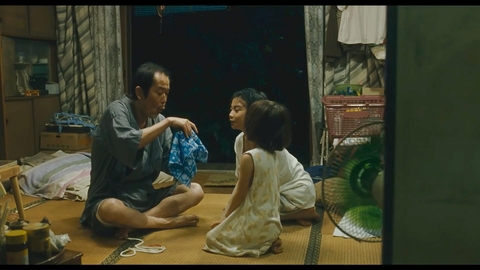
I really wish that the movie was more biting or critical instead of its nuanced, “humane” stance. It doesn’t move beyond the realm of a standard understanding of human motivation, a kind of universalized humanism that I’m beginning to tire of. Within these parameters, the movie is a marvel. It is best exemplified by a sequence in which the weather hastily changes without actually showing the change in weather conditions but by use of light tonalities and sound effects. Human motivation, the movie seems to be saying, is as changeable and unpredictable as the weather and that there is usually more than one motivation in our consciousness. This seems to be a condition among family members where, in what seems like a soft critique of Japanese culture, the family here is based on survival and affection for the discarded instead of relation by blood, a still important feature in Japanese life. Absent from all this is a clearer picture of what renders these people outside of mainstream society. At the very least, Kore-eda highlights the irregular work conditions of some of the family members. Yet, in contradistinction from usual movies where money seems to flow, it’s also difficult to gauge why these folks are desperately poor if they’re also grifting and shoplifting, like, all the time. Surely they could afford paying for a particular ritual but instead they do things privately–as in they basically do the digging themselves. Or are they just really that cheap? Even though important revelations are revealed elliptically, the movie invests in an emotional economy. For instance, I didn’t find the film particularly funny in the first section and particularly tearjerker-y in the second half as some initial Cannes coverage had characterized the film. The sentimental scenes are understated which may account for my muted reaction. I think the movie deliberately doesn’t have a corresponding portrait of a material economy that prevents me from fully convinced of the film. Is there a connection between the economic state of these characters with their emotional ones when the films seems to insist that their core being is somewhat removed from their “poor” conditions? It’s this chasm that I wish was bridged or bridgeable, but then maybe I’m asking too much. Sometimes hearing the celebrations at a distance counts as celebrating itself or so the movie says at some point.

Changed my mind. The film shows how Japan is digging its own grave by the manner it treats its undesirables. However, the definition of such peoples is quite narrow. No handicapped people, no ethnic minorities, etc. The deviancy seems economically based. In addition, the state, in the form of the police, although rigid in their outlook and line of questioning, still holds a recuperative function by elevating the figures above their former socioeconomic status at the expense of emotional connection. With these things in mind, Kore-eda and co. have made a decent movie, but also, in the time of crushing world wide political, economic, and environmental upheaval, do any of these things matter? An auteurist film with old fashioned ideas about humanism? I need something more radical and life-sustaining, truth be told.


#2018 #June

Nationalism is kawaii

A cute but politically conservative film

Mirai (Mirai no Mirai) (d. Hosoda Mamoru)

The Japanese title is Mirai no Mirai, which is a play on words because Mirai is the young boy’s little sister’s name and mirai also means future. The kid either imagines or falls into a fantasy world where he skips along different periods in Japanese history. The important timeline is when the young boy meets her younger sister as a teenager while he remains a young boy. Got that? The film is trying to show that the young boy, petulant and jealous over the new addition to the family, needs to learn to be more responsible and nicer to his parents and sister. The movie travels back in time to show how his grandparents met and how his mother, despite her constant nagging over his behavior, was no worse than him at his age. It also moves forward in an alienating, and this is key, murkily multicultural Japan as seen in the Tokyo Station sequence. The cute and playful way he falls into this other world is entertaining, but when examined deeply, shows a rather linear and rigid sense of time. Two main things concretize this linear and literal time. First, there is the careful renderings of homes in the film. The current day home is, despite what grandmother says, modern, unique, and playful. The very visible Hadid volume is no accident. The homes of the past are smaller and more traditional, especially in the use of wooden and paper materials. There is an implied story of an economic trajectory here. The grandparents lived humbly, while kid’s parents improved upon that, and the current house is no usual middle class adobe. In fact, I’d say it’s slightly upper middle class or shows a financial security/confidence in spite of the employment circumstances of the parents. The dad is now a freelancer which means mom has the stabler and probably higher pay check. In these small ways, the film wants to show a modern Japan, but not too wildly modern, just enough to cover up its actual conservatism. Because of the linear time structure of the film, there is an implied sense that the next generation, Mirai’s and his brother, will live a better life too. I think this is part of the appeal of the movie in post-Fukushima and post-bubble Japan, that somehow the future is bright as long as we take some responsibility now, where responsibility is not civic or environmental but personal and national. How is it national? This is where the second item where time is concretized, which is in the form of the traditional Japanese dolls. In the film, the dolls need to be put back immediately after Girl’s Day or else, superstitiously, Mirai’s bridal prospects will suffer. There is a whole sequence about putting the items back properly and completely played off as a comedic bit but is in fact gravely serious in terms of traditional continuity and preservation. As long as rituals are practiced accordingly, disaster can be forestalled.

One additional thing, the film sensitively portrays the grandfather character based upon a past incident, which we later learn actually occurred during the war. It’s interesting how WW2 comes into play here, which turns this film from personal fantasy to personal-national. The scene is brief but also significant because it grounds the story into history. There is no further contextualizing the war here except as a Japanese historical event…which brings me to my Okinawan background. How are Japanese people from Okinawa supposed to relate to this? I immediately felt I was dispensed from this story. This is why I find the movie slightly off-putting. Like many mainstream Japanese texts, it can not deal with Okinawan, and by that I mean what happens during the war when Okinawans were demarcated as not Japanese enough for their discrimination and slaughter. In this way, this is not my Japan and I’m not supposed to be part of it. Fine by me though, but I want to show that despite its cuddliness, the film is not easy to embrace, especially by someone who is imagined as not properly Japanese subject.


#2019 #50

Unforgiven

Mourning the loss of white bohemian NYC

Can You Ever Forgive Me? (d. Marielle Heller)

I didn’t articulate well why I didn’t like this rather well-made movie. On the literal level, it’s a film about an unlikable character who forges documents in order to pay the bills. She, a lesbian, befriends a gay man who has seen better days and who also may be into small time grifting. Their friendship is another key aspect of the film as both navigate 90s NYC, an era they don’t seem to belong to. On another signifying level, the movie is about white privilege—which the film celebrates since with its anti-heroine figure. Why is it about white privilege? Well because a) she wouldn’t have been able to enter into these establishments where she sells the forgeries and tricks the buyers into purchasing her items had she been a non-white person and b) her accompanying stories of where she got these items, from relatives who are into certain authors, would not have seem believable had it come from a racial minority. With the absence of POC in what is supposed to be NYC, what the film does is to create a closed off world of white people only interacting with people like them—which is more than likely as seen in the writer parties shown in the film. The only time we see POCs are at the start of the film, with no speaking parts, and they are shown to differentiate themselves from her, the loser character, but also the heroine, whom we are supposed to identify with—that to cheat creatively may not be all that wrong if the original is improved upon (that is the film’s message)—or at least to sympathize with her. The other character is a middle-aged gay guy who keeps putting up appearances despite hints of him being homeless and isolated. His “white privilege” comes in the form of a young Latin lover; despite his age and circumstances, he is able to hook up with a sexy young dude. The heroine, even in her repugnance and deception, manages to have someone attracted to her. Thus in the film, even though these characters are without money, they still have access to things and people that POC do not; and these things are just slightly in the background of the film and hasn’t been noted in the reviews I’ve read. Lastly, there is no mention of the increasing gentrification of the time period being depicted. She continuously cannot pay the rent but this is ascribed to her unemployment. The gay guy is homeless because the bohemia of his youth, including cheap dwellings, are things of the past. None of this is hinted at because the film is interested in her “crimes”. Can you imagine a WOC entering and accessing a university library archive and stealing documents from there? We are supposed to cheer her on but had it been another kind of person, they would have been restricted from entry or gone to jail—with a tougher sentence. Instead she ends up writing a book about it and gets it adapted into a film. That’s what I mean by white privilege. So yeah it’s nice to cheer on a movie that has lesbian central character and friendship with a gay person, but it’s their whiteness, their access to things, that I can’t relate to at all.

#2019 #24

Design a site like this with WordPress.com
Get started