Arcades project

Nippon avant-gardism

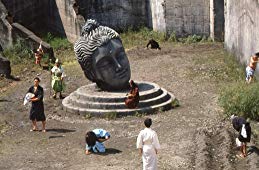
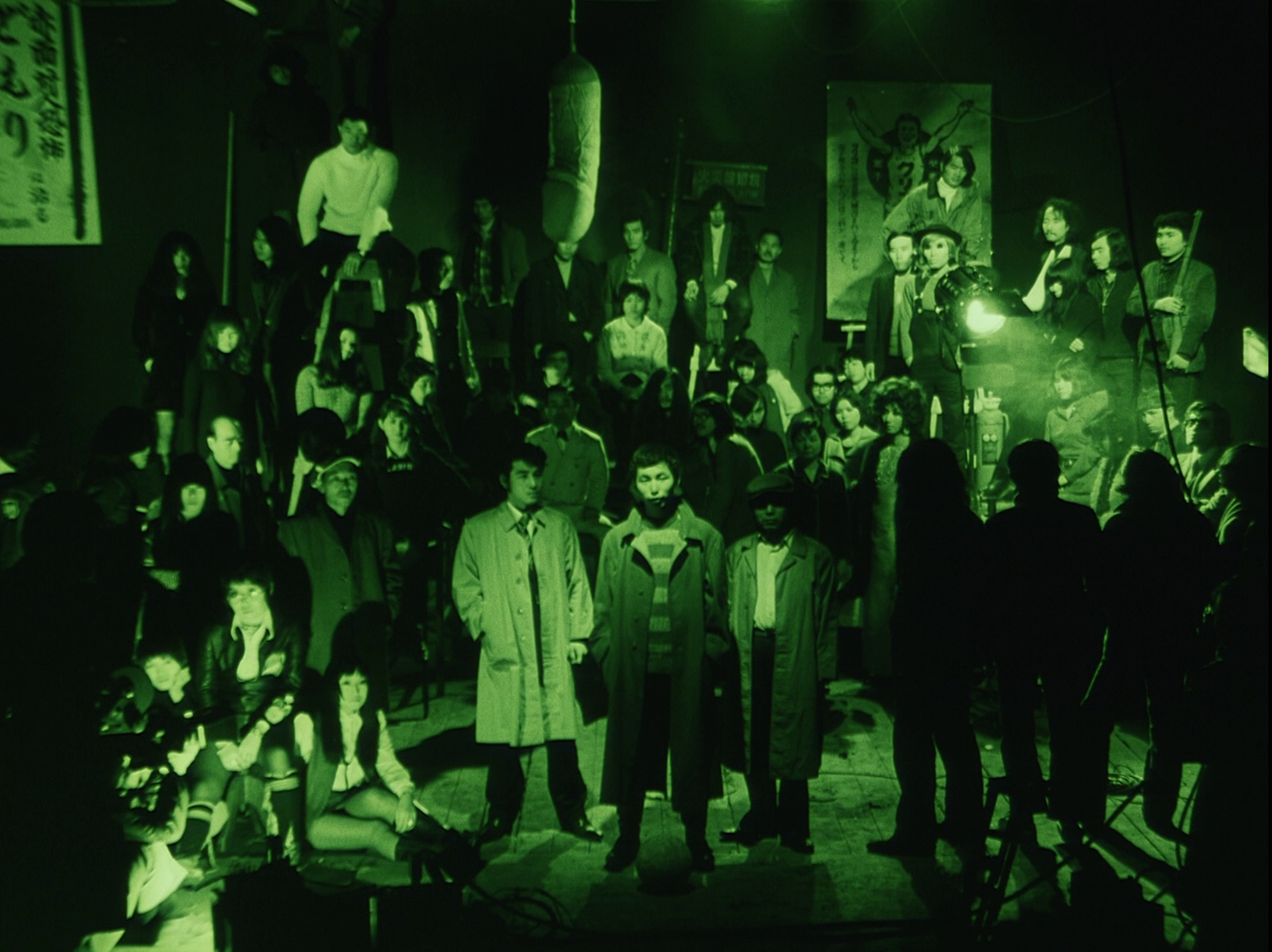
Throw Away Your Books, Rally in the Streets (1971) (d. Shuji Tereyama)

It’s a young man’s film, screaming at the top of his lungs, from a provincial point of view, reacting to the changes in Japanese society, with a focus on the materialism and its entailing hypocrisies. The climax is an arresting tearing away of the fourth wall where the anti-hero and the cast of characters show up to address the audience. The movie theatre obliged by turning the house lights on for that sequence—a unique experience. However, its critical vision isn’t radical or deep enough. Even its flirtation with counterculture like the gay transvestite characters isn’t engaging as Matsumoto’s Funeral Parade of Roses, which was released only two years earlier. Also, there’s an attempt at including women to the wild party but stereotypes abound, including a highly problematic rape scene. It’s a straight young man’s cry, the film is. The ragged edges are the film’s draw as Tereyama is willing to throw in all sorts of tricks, from cinema and theatre. It’s also overlong and too self-consciously serious, and playful too, if I may add. The startling thing about the movie is how it captured a cityscape that’s both lost and still existing. The neighborhood where most of the action occurs is not much different from where the film was screened, near an aging arcade, right by a cluster of working class apartments, thus an odd location for an art movie theatre, where right in front of the place is an old style kissaten (coffee shop) that seem to have been stuck in the 80s.


#2019 #May
After school special

Smell like teen spirit

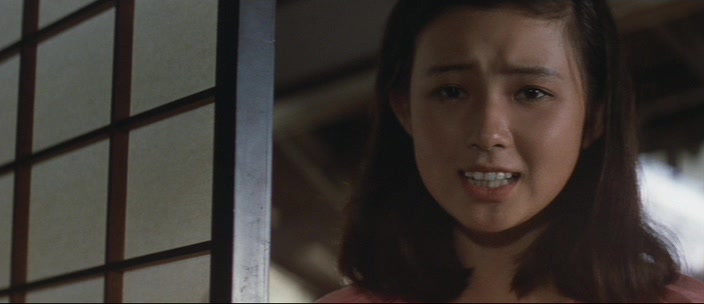
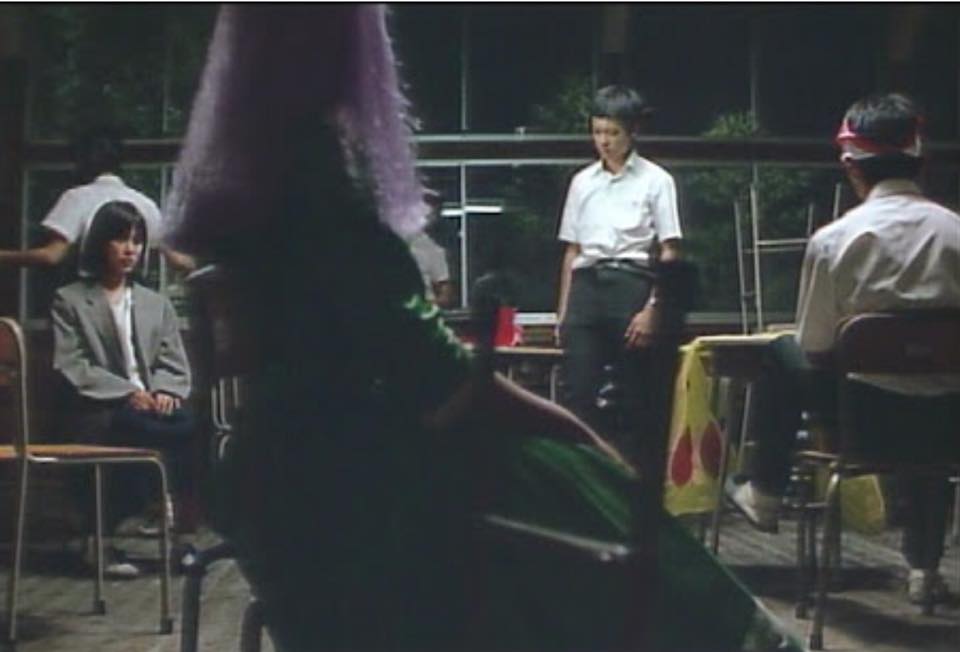
Typhoon Club (1985) (d. Shomai Shinji)

It’s an atypical coming of age flick. Apparently none of the teenage protagonists learn from what are supposedly life-changing experiences. It’s a relief to see such unsentimentally in the genre even if the teens sentimentally promise to meet up after the tumultuous night stuck in the high school.

The main problem with the film is that it keeps punching down, right up to the very end. The most self-righteous figure is given an undignified farewell. The main antagonists in the film are too milquetoast to be real adversaries and they have too little power or prospects in life to be the object of criticism, which is why I think the film fails to be critical enough. For instance, one of the kids go on fully dissing the schoolteacher. Honestly though, he isn’t the one in charge. If you want to go after the man, go after the principal, the mayor, the prime minister; what counts as authority, in the film’s thinking, is rather juvenile. It doesn’t go after the real bad guys.

It is a world without parents. The shotgun wife doesn’t even have a father meanwhile kids are running around during a typhoon and none of the parents are concerned enough to be making calls? The film tries to be different to varying degrees of success. It has a lesbian coupling, but it’s coming from a male hetero point of view. It has a disturbingly extended scene of a young man attempting to rape his female classmate. There is not enough motivation for the character to merit such a sequence. It’s pure sexist spectacle. There’s also a long shot of young teenage women in underwear that is rendered too far enough and hazy enough not to be labeled exploitative even though that’s what is exactly happening.

Reportedly the film was made towards the end of the legendary run of the ATG. And in its final gasps, it did not seem to be able to say anything of importance like the dragged out scene of the hero character rearranging desks and chairs for his final act of heroism–perhaps reflective of the indie studio’s last days. The final minute of the movie is somewhat significant: the rectangular iris looks like a coffin.

#2108 #September

Hipster life

Taste the fucking multicultural rainbow

Annihilation (d. Alex Garland)

Less of a sci-fi flick than a hipster movie about multiculturalism–of all things! Garland parlays his problematic representation of the passive Asian woman as a sex robot from his well-reviewed Ex Machina (2015), where most reviewers ignore or seem to be unaware of this problematic stereotype, into a wider explication on race, interracial romance, and cultural (dis)assimilation. Assimilation, by the way, would have been a better title for the film.

Here’s how hipsters believe that they of all people could not possibly be racist: if my sexual partner or LTR bae is a person of color, how can I be racist? This is the thinking that informs the film: use stereotypes and fuck them too. The female protagonist is having an affair with a black colleague and his race is intentionally unmarked racially. “We are physically and intellectually compatible,” he says, which is another way for the movie to say race doesn’t matter while intentionally casting a black man for the part. The camera doesn’t show them fucking but implies it, which is a curious elision when the film has no problem going all out in visually representing the alien other–as a dancer out of a Sia or Bjork music video.

Garland is well too aware of the explosiveness of the meekest representation of interracial sex, but he doesn’t extend this courtesy to female Asian subjects, apparently. This I-don’t-see-color makes it possible for Garland to use other stereotypes that populate the film like the inexplicably psycho Latino whose pathology is hinted as linked to her lesbianism. Finally, the alien creature is actually the racialized other who threatens the physical but also racial and psychological integrity of the white female protagonist in the form of cellular mutation. The fact that the alien mimics each of her move reminds me of the strategy of colonized subjects to ape the actions of the colonizers. However, here, the colonized is the violent one, in contradiction with actual colonial history. The alien colonized is also represented as living behind a rainbow colored shimmer, perhaps an echo to the questionable melting pot ideology. And here’s the thing with this movie, the colonizer outwits the colonized by having the latter unable to assimilate into the body of the colonizer and self-destructs instead. Meanwhile the white bodies are able to carefully assimilate the alien elements into themselves and fuse the two together. In the end, it is the white hetero couple who walk away intact. This doesn’t sound like sci-fi but everyday life in any hipster metropolis.

Basically, the newly mutated power couple remain white but now with multicultural bits, like the hipster who will correct your pronunciation of pho without bothering to think hard as to why pho is available in North America. Forget history, immigration, the disastrous war. They just eat the food and fuck them, that is all that matters in the la dolce hipster vita. Hipster racism in a nutshell, this movie.

#2018 #March

Matsumoto parade

Suicidal teen because the love story is not about her

Went to the Matsumoto Toshio screenings. Saw two feature lengths and four shorts. Funeral Parade (1969) is by far his best work. Shura (1971), while good, is just good. His period films are not quite convincing. War at the Age of Sixteen (1974) suffers from indecisiveness. Is it a commercial film or an art flick? He injects sentimental music of the period here and there and a titty shot of a character who’s supposedly sixteen. Otherwise, film is about memory. At 16, heroine’s mother faced the war. Her daughter, meanwhile, at the same age, faces ennui. She’s too opaque to be taken seriously despite her suicide attempts. Even the stranger, when it comes down to it, doesn’t have much in terms of characterization. He’s there to stir up trouble in the family. This isn’t an original idea, Toshio, the whole thing sounds like Pasolini’s Teorema (1968). The actress playing the mother has a passing resemblance to her Italian counterpart. Each character is burdened by a personal memory which is a reflection of an aspect of national history. The mad uncle, if I’m understanding the film correctly, listens to the speech of the Emperor’s surrender over and over again to make him return to a calmer state. The climax occurs during a rural festival where, finally, all the secrets are unraveled. The film seems like an acute and accurate portrayal of how Japan negotiated the disconnection between war-time traumas and postwar affluence. (The film would make an interesting double/triple bill with Teorema or even Pigsty (1969) or Resnais’ Muriel(1963)) What’s crucially missing in the discussion of Japan’s responsibility in the deaths, violence, and trauma to other nations during the wars and colonial period. Matsumoto and co. cannot seem to conceive that others may have suffered and that the country’s prosperity is in some ways a result of the colonial projects of the past. This is why the film ends rather happily but not satisfactorily for the more critical viewer. The reunion isn’t with the young people, as is usually the case, but the between the industrialist husband and the bourgeois wife.

When the country is going mad what does the psychiatrist recommend?

Dogura Magura (1989) is about madness. It’s about the indeterminacy of truth and reality as the protagonist, and, by extension, the country is headed toward disaster. The film is set in the 20s but is also about late 80s Japan. A strange murder case is at the center of the movie which involves a mentally unstable young man and his mother. Egging him on are two psychiatrists where one or both of them might not be who they are. The film seems to criticize psychiatry and institutions in general in their inability to assess the public it serves and steer the nation to a saner course. Matsumoto orchestrates the chaos between one plane of reality/madness with skill and panache. Yet I kept wondering what if this hall of mirrors game is actually a sign of entrapment that this is what Japaneseness is, a constant referring to itself, an endless loop, with no escape, which is why the final shot is that of incarceration. Part of the inability of escape or alternative has to do with the historical inability to reckon Japan’s own war crimes. Matsumoto cannot or dare not consider this in the equation of his obvious left wing stances. This is why when he makes his semi autobiographical and tongue-in-cheek short called Dissimulation (1991) where he plays himself, a director at 60, he can no longer engages in national themes but his personal career. It’s actually funny and tries to have the complex structure of Dogura Magura but fails instead. It’s still a worthwhile work since he revisits the areas where he shot War at the age of sixteen but without any sense of politics or revolt. His late 60s short called Mothers (1967) is more intriguing as he tries to connect the lives of four different mothers under the guise of a children’s film. Incidentally, his work seems to be preoccupied with mothers and absent fathers, two very important figures in post war Japanese society not in the psychological sense but as the economic producers of the family unit and citizen/ consumer/tax payers. The short features an eyebrow raising document of an African American mother in what is probably Harlem. He doesn’t make her speak but shows her with a glass of alcohol and dancing to some music. Matsumoto would then shift his focus to Vietnamese mothers , a clear swipe at the America’s military engagement in Vietnam. Images of war and violence, but where are similar images of what Japan did? It’s not part of the Matsumoto parade.

#2018 #March

The help

Senora is so nice

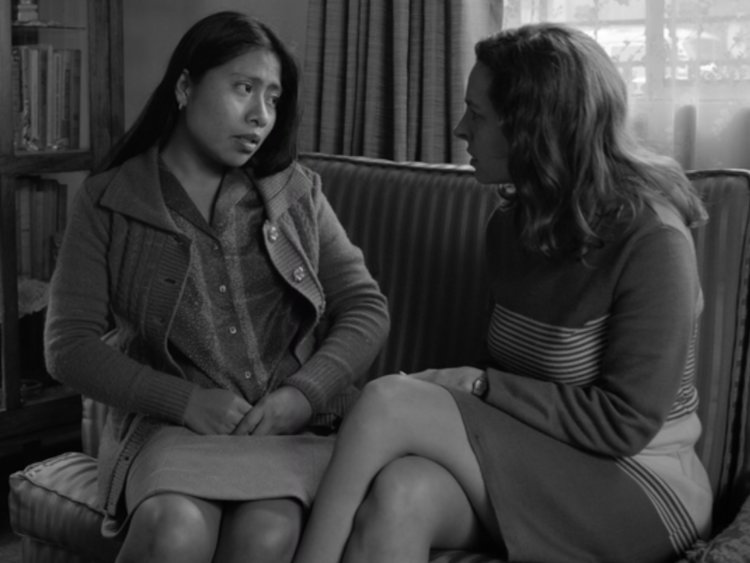
Roma (d. Alfonso Cuaron)

Raiding the vocabulary of Italian neorealism, Cuaron’s love letter to 70s Mexico City is delightful to behold visually but equally easy to shrug off as a melodrama. As a melodrama about the indigenous maid, the film falls flat because we don’t really get to see her, fully. She is a plaything to show off Cuaron’s liberal politics. Yet when the moment when she explodes, Cuaron mutes her frustrations with a treacly and improbable scene of inter-class and inter-ethnic solidarity–which is far more preposterous than Sandra Bullock as an astronaut. The film is a melodrama of the upper class who, despite harsh words towards the help, is ever so generous and benevolent at least in front of the camera. We’re offered a few possibilities to understand and piece together the racialized, economic and political antagonisms of the 70s era Mexico but they remain unresolved or partially touched on moments in the film. Some of the images are spectacular that I could imagine Bolano’s Mexico City in The Savage Detectives mixed in with my own faint memories of 80s Manila. So evocative. But these images are just that pretty images, camera technique, in short, distractions, like the dog shit that litters the garage, from what it truly is, a class-laden nostalgia for rich white folks.

#2018 #8

Threadbare

Phantom Thread (d. P.T. Anderson)

What passed for romance before #metoo

Lovely filmmaking. So much assurance, skill, and restraint. However, isn’t the story rather silly? Poisonous mushrooms. A timeline that seems outside of history or thoroughly concentrated and crystallized in that magnificent house. Even the past isn’t haunting enough: she just stands there. Another male monster, faded and fading, along a long line of monsters from PTA. But it’s her who’s the real scary one, isn’t it? Is she for real? Not quite. Her provenance isn’t even clear enough. Ditto her accent. Not quite convincing figure only made tolerable by the actress’s gorgeous performance. “I’m hungry”, he says, and I feel the same. It’s an elegant work but not satisfying at all.

#2018 #3

American vegan pie

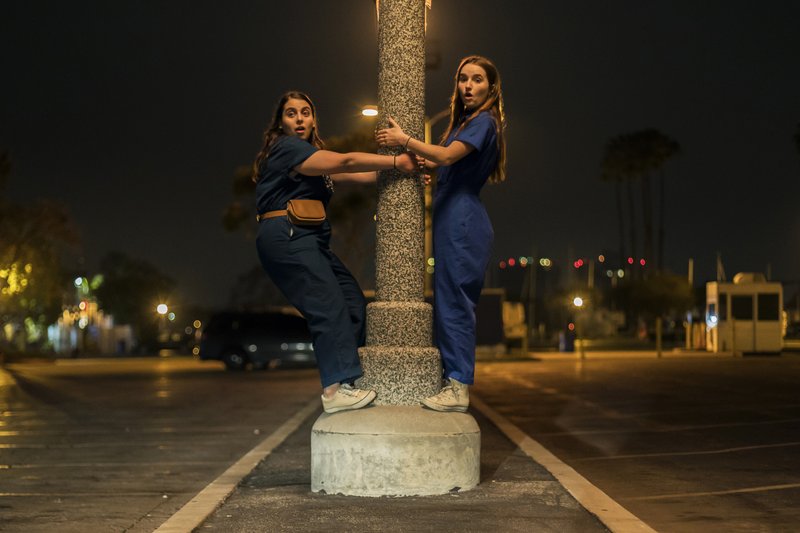
Booksmart (d. Olivia Wilde)

Class aspirations

A female-centric spin on the teen movie, and specifically, the last day(s) of high school sub-genre. It’s actually quite sweet as it chucks the usual misogyny one finds in these films out the car window where boy loses virginity at girl’s expense in the backseat. Here, it’s girl-on-girl action and Wilde turns it into a probably accurate moment of teenage embarrassment. There are passages where instead of dialogue, indie music fills the screen and it’s smartly done that I’m hoping there’s a OST. So now let’s go on with how the movie fumbles or becomes cringe-y, actually super cringe inducing.

In light of the recent news about wealthy folks buying their kids’ way into elite universities, film is about class but will not acknowledge it. The crisis that precipitates the long night of partying occurs when the pushier kid of the duo realizes that she’s not the only one going to Yale. A party kid is also going to Yale. The “dumb jock” is going to Georgetown, to her horror, while the other is going to Stanford. How is that possible? The movie doesn’t delve into the specifics, which may or may not include bribery as we begin to observe that these are upper middle class kids of what looks to be the tonier side of L.A.’s San Fernando Valley. Meanwhile, the pushy kid lives in a sixties style Southern California apartment. There must have been an implied class dimension somewhere in the original or rewrites of the script but it’s nowhere to be found in the finished version. The other kid lives in a noticeably smaller house too. I wish there was a line or two about how lower middle class teens have to work doubly hard just to get into an Ivy which is coded as a path to surefire success, already a problematic notion. But whatever. It doesn’t occur to these teens that perhaps their wealthier counterparts keep making it because of their resources. Film ultimately has no class consciousness. Instead, what does it have?

It has Malala. Yes they idolize her and it’s their “safe word”. If one of the two utters it, the other person has to drop everything and follow whatever the speaker says. No question asked. It’s a rather distasteful choice for two white teens to evoke a refugee’s name as their code word. In relation to this, the less pushier kid is going to Africa to be, basically, a white savior for the summer. Uh huh. And Uganda is mentioned in a flirty talk between two white girls. Huh? In other words, the movie is still no different from most Hollywood product when it comes to thinking about the Third World as a butt of jokes. The movie tries to buckle stereotypes despite this. The pushier kid is on the plump side. Body positivity! The archetypal jock is black and his best friends are Asian and “Mexican”, the last point weirdly made explicit. What does it mean for a (tired) genre pic that tries to change some things to seem more in tune with the times? It’s progressive, but only superficially. It still desires to be elitist: go to Yale and join the ranks of upper middle class suburban champagne lifestyles and dreams. Because, otherwise, the flick implies, you don’t count.


#2019 #109

Don’t be a humanities major in Japan

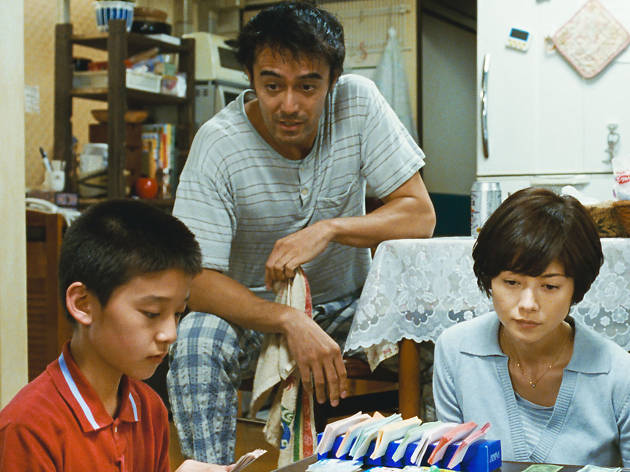
After the Storm (d. Hirokazu Kore-eda)

This art film has the gall to say do not indulge in your creative passions

I want a clearer stance from the film whether it’s one’s personality or one’s time that shapes their material and psychological destinies. And if it has to do with the material conditions of a time period, I want the criticism to be sharper. Is our handsome protagonist a ne’er-do-well or is it also because his society can not tolerate outliers like the literary type. The typhoon doesn’t sweep any of the ambiguities away. It’s the usual finely observed humane film that Kore-Eda keeps delivering but I do wonder if his international success has to do with his (intentional I would argue) not-so-pointed critique of Japanese patriarchal and capitalist society which he further waters down with sentimental moments and unpredictable (natural) catastrophes. There is no confronting the Woman Question that rigidifes and shapes the lives of women. The film sort of deals with this but never at the root cause: outdated gender thinking. Perhaps this is why we need Japanese female directors too.

#2019 #106

Say yes to the dress

Champion of the (digitally) oppressed

Captain Marvel (d. Biden & Fleck)

She’s the most powerful woman, according to her black woman friend. She’s like white feminism, powerful but not clear about the past, the history of feminism itself and the role WOCs and queers of color who also took part in feminist activism and critique. There’s a nice twist when the militant heroine realizes that they’ve been playing on the wrong side of history except that this awareness is not extended to humans, only the heavily CG’d creatures. If she were to side with the oppressed and the refugees, she wouldn’t be working for an imperialist government agency. But her brand of feminism is fine with that. She simply changes the color of her costume, and voila!, she’s the latest palatable faux-feminism for mass consumption. The film also mimics Hole’s Courtney Love’s career trajectory, where it’s a 90s Hole song that closes the movie when the band was its height, from scrappy grungy princess to Hollywood starlet to a B, C, or D celebrity fixture who thinks she’s an A.


#2019 #104

Pretty guilty

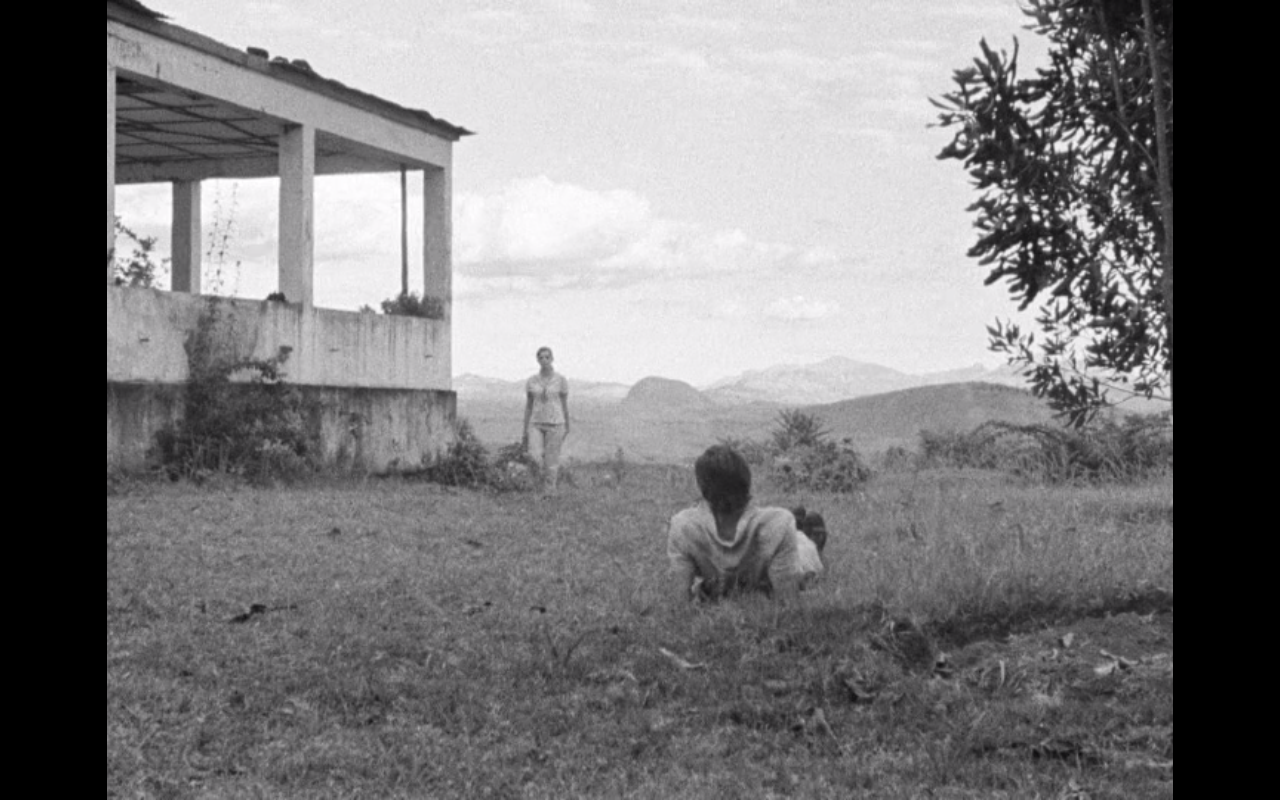
Tabu (d. Miguel Gomes)

Colonialism is romantic for the colonizers

Nicely done. Had I seen this years ago, I would have liked it more. Times have changed. Pure aesthetics especially in works under the banner of avant-garde and experimental are no longer enough. At what point is actual politics evaded in the parade of pure images? Tabu is a well-crafted movie about Portuguese colonialism using gorgeous black and white cinematography. It uses the aesthetics of silent cinema to gorgeous and, at times, heartbreaking effect. I can heap more praises however this is by no means a decolonizing work. It still insists on telling a story about white pain and guilt at the expense of the actual pain of the colonized. We have seen these images over and over again for more than a century of cinema’s existence: voiceless natives; who stare at the camera; they are usually indigent; they are shown doing manual labor; and there is no visible sign of dissent much less to overthrow the director from his chair. It’s just not good enough for me. Yes, it is a fascinating experimental work but it just seems “experimental” means “yes we want to address our colonial past but we want to do it in a visually pleasing way and the only radicality we can manage is not in the politics but in the artistic technique”.

#2019 #87

Design a site like this with WordPress.com
Get started