Ego deluxe

Balikbayan Box #1—Memories of Overdevelopment Redux #4 (d. Kidlat Tahimik)
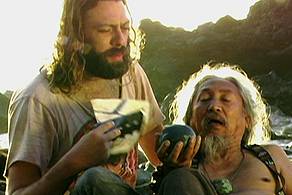
Kidlat and his white son giving us a taste of Philippine independent cinema

With a title like that, I should have known how self-indulgent, long-winded, and self-important the work, cobbled together from three working films, was going to be. (The film has a 2 hour 40 minute running time.) Tahimik is the OG of Philippine indie cinema, but like some OGs, their sensibilities can be stuck in the past and their current work are just riffs and elaborations of a kind of thinking that is archaic to contemporary audiences—but exotic enough for foreign viewers.

His name already tells you that a) it’s a pseudonym (kidlat = lightning and tahimik = silent, thus silent lightning) and b) it’s a self-orientalizing ethnicized/indigined persona running against the grain of American and European perceptions of the Filipino and the Philippines but also playing into it too. It’s a persona that was popular in the 70s, a mixture of western hippie-ism and nationalist fervor for anything indigenous of Philippine origin, which explains the mash of regional indigenous identities paraded in the screen and the needless native loincloth appearance. He wants to be a Filipino folk figure but he comes across as its unintentional parody too. Take a look at the film itself.

For a film about the Philippine past, it is populated by many white people. In fact, the narrative is driven by a white man’s search for him. The white man (played by the director’s son), who seems to have been in the country for a long while, speaks in a Filipino English accent unlike the director who speaks with an American one. Ditto the other white people who are in the film. Their English is inflected with Filipino accents while some of the Filipinos in the film speak with an American one. Why does the film have to center on a white protagonist? I think that Tahimik is still working under the presumption that white presence and white accent legitimizes the film even if he keeps on insisting with his words and appearance that he is looking for the native version of history. There’s also the strange relationship with the other man signified as native. They speak English with each other most of the time, never occurring to them how odd this form of communication is. (I thought it was because the other man couldn’t speak Filipino and could only speak English and a dialect, but later they do speak Filipino. They must be of the generation where English was generated as a sign of civilization even if they speak it so dressed in native costumes.)

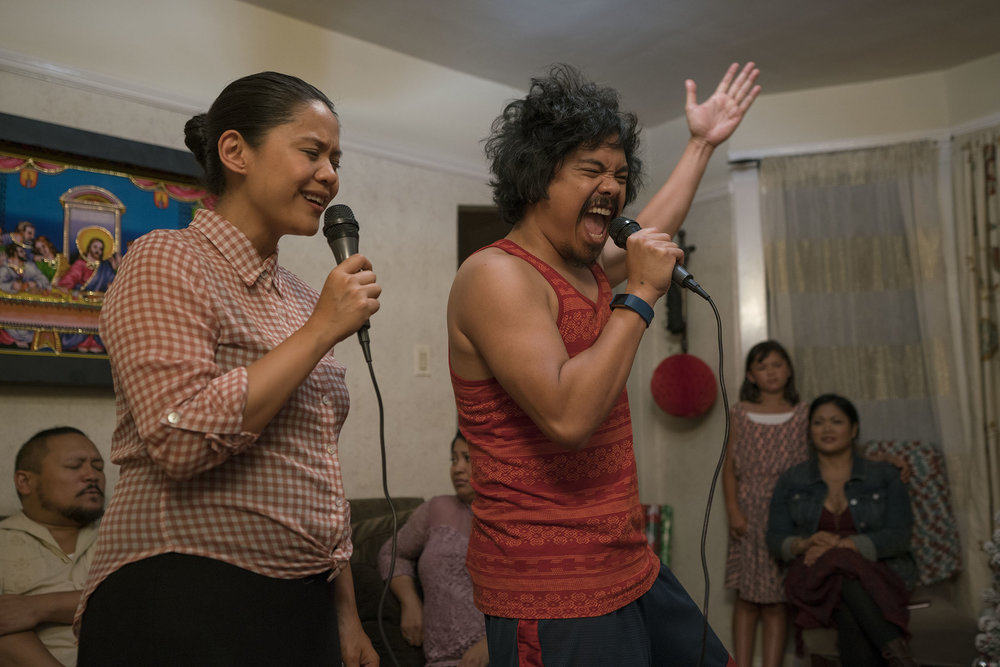
Tangent. There’s a witty sequence in the Filipino American indie movie Bitter Melon that highlights the unique verbosity and vocabulary of Filipino English. The uncle, probably the same age as Tahimik, keeps talking in this odd English while the next generation kids can’t suppress their laughter. I’m only bringing this up because in the final segment of the Tahimik film, he directly addresses the camera and comes up with what he thinks are witticisms in English, but comes across as a dated form of Filipino English, like the uncle’s in Bitter Melon. And it’s not just language, his conception of the world is similarly dated, too. Not once is the term post colonial mentioned even if that is what he’s trying to do, with mixed success, in my opinion.

There’s also something objectionable about his indigenous-ness. It’s an act, a cultural one. There’s no actual political or economic analysis in his account even if he see him participating in a strike. It seems that strike itself would have been a far more interesting and enlightening subject matter than what he does in this work, which is basically revisiting and extending his past themes. There’s no mention of Marcos. There’s no mention of the current economic state of the country despite having the term overdeveloped in the title. What matters to him is this imaginary figure of a Filipino slave/stowaway who ends up circumnavigating the globe with Magellan as if that is an effective counterpoint to Spanish and American colonialisms. How so? the film never makes it clear. Although he make sure that we note that Tahimik as the slave beds a white woman, on and off screen, a kind of racialized machismo that really dated the director’s thinking.

Ironically, it’s the credit sequence, a parody of karaoke sing a long with running text about Magellan’s death in Cebu that perfectly encapsulates the themes of the movie in a succinct, humorous, and post-colonial manner. Had Kidlat just shown that, I’d given him an Oscar.

#2019 #40
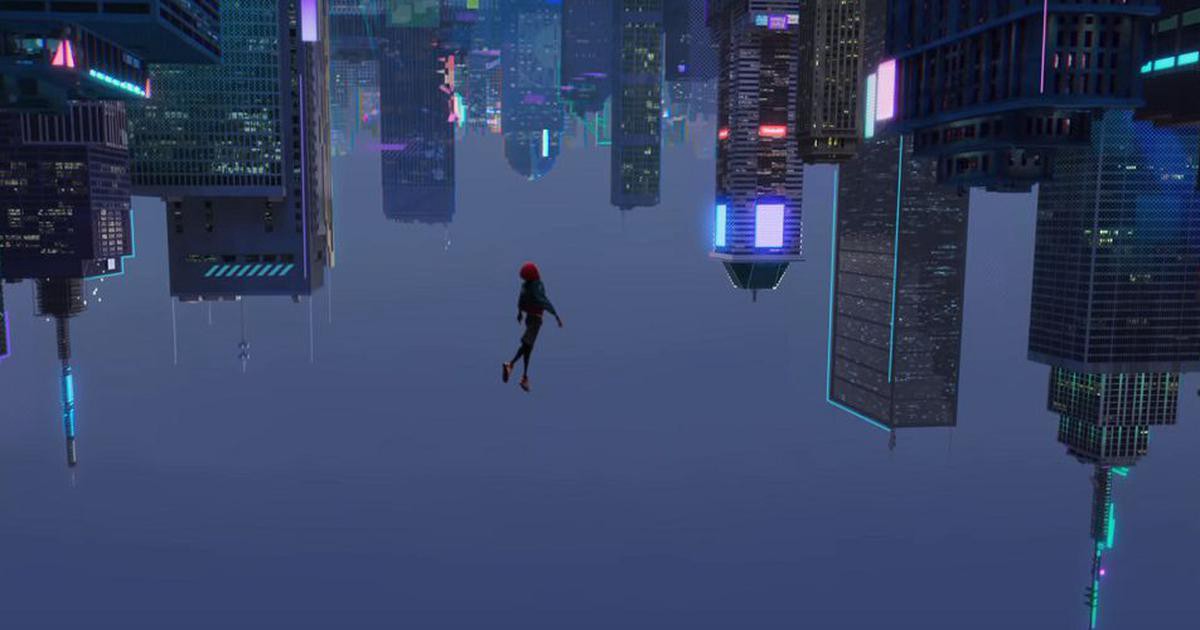
Black heroes are out of this world

Upside down world because this is not our Spidey

Spider-Man: Into the Spider-verse (d. Persichetti, Ramsey & Rothman)

It’s totally fun and beautiful to look at, however, not completely sold on it. First, yes, we finally get a non-white Spidey, one that’s Afro-Latino living in Brooklyn but then look at who made the film: they’re still white guys. A truly diverse Spidey-verse would have given a chance to a diverse creative force behind it. Second, why does Mike’s dad have to be a cop? Whether this is the case in the comic books or not, it matters a lot: as if to have a legitimate African American family on screen is to have a police officer in the family—the very same institution that has been antagonistic to the black community. This is no accident. Most forms of enlarging minority acceptance use either the police or military first in their representation of inclusiveness. By this, I would like to point out the initial acceptance, about over a decade ago, of gay couples have been with (usually) white military men and then women. Having the participants be part of the colonial, imperialistic, and repressive institutions somehow gives legitimacy to the latest inclusivity is the troubling logic of mainstream US culture. It’s also no accident that Spike Lee has to make his black protagonist a police officer for the larger society to be able to follow and ultimately accept the story. Whether the filmmakers realize this or not, the mechanism of legitimizing a black family via police institution is woven into the cultural logic. Third, why is it that the only bad guy to die on screen is the black figure? Even the weird Frankenstein-like creature is spared such a representation. Spider-Man’s murder is visually obscured. According to the film, it is part of the lore for someone close to die, however, in contradiction, the other Spideys show how flexible this death narrative can be. There is no motivation attached to the uncle’s villainy. What is emphasized instead is Miles’ attachment to his cool uncle. So we’ve come to this set up: cool, single black uncle who dies and uptight police father. Guess who needs to be eliminated? Isn’t this also the set-up of Black Panther? Hollywood films cannot imagine having two black figures worthy of heroism. One sings, the other dies. Finally, I want to bring up the fact that this Spidey film isn’t set up in our universe, but an alternate one. So we finally get this cool black Spider-Man who seems more in tune to our times and sensibilities, but he’s not of our world. He can’t be part of our world, but needs to be distanced. His use of Spanish is meant to indicate inclusivity, but he only says a handful of them. It’s mind blowing what passes as inclusivity when what it really is is partial acceptance, only a few inches away from tokenization.

PS Observe the seemingly entertaining opening sequence introducing Miles and his family. The joke on the audience is that Miles’ pop is a police officer. Yet in more realistic terms, that scene of Miles being stopped by a police officer is more horror than comedy as it could lead his arrest. Next, what does the scene of Miles as Spidey hugging his dad remind you of? Wasn’t there a widely shared photo of a young black boy hugging a police officer in the same manner? Except that that story was actually twisted since the kid dies from her white lesbian parents’ suicide. Alternate universe? Yes, for white people. For them America is good, just, and neon bright happy.

#2019 #35

Bitter identities

Bitter Melon (d. H.P. Medoza)
Searching (d. Aneesh Chaganty)

This American lie

Bitter Melon is a comic and rather dark take on Filipino-American life in Nor Cal’s South Bay Area. What is most surprising about the film is that it shows Asian immigrant life that doesn’t revolve around whiteness or being white or assimilating to be white but one that was confident in being Filipino and (first generation) Filipino American. Life partners and pals tend to be fellow Asians or African Americans and the only time we get to see a white figure is during a brief gratuitous sex scene of a gay Asian character topping a white dude. As I said, it’s a gratuitous scene BUT almost necessary since it flips the script of gay Asians as perpetual bottoms. There’s a teased secret that the Filipino mom doesn’t approve of a son’s wife because she is Black, but it turns out it is something else that was of concern. Stretches of dialogues are not even in English or Filipino but a northern dialect. And finally, and this one kind of hits close to home, is the problem of patriarchy and toxic masculinity that lurks in some Asian and Asian American families. One of the sons is a wife beater and the film slowly reveals the mechanism that was put into place for his behavior and those of the other sons, who have had drug and psychological issues in the past. The final reel of the film deals with this and I think the director does a good job of showing the audience if we are to take what transpires literally or metaphorically. Film deals with all this with great humor, from the goofy yet sinister karaoke sing-a -longs to “depression is for white people” which is first told as a joke but becomes a long-standing issue of Asian immigrant families’ inability to deal with mental health issues. It’s a mature and confident work expressing an aspect of the Asian American experience that deals with the darker aspects of living in immigrant America.

Searching really does work in a few ways: good search movie; good use of computer screens, cell phones, and social media to tell a story; great to see an Asian guy be the hero in a Hollywood flick. Besides all these, the movie is about assimilation, more specifically assimilation of an Asian American family into a largely white American society. When the dad scrolls through his and his family’s contacts, one sees names written in English and Korean and Korean-sounding and Anglo-sounding names too. Race isn’t mentioned in the movie even though it tries to gingerly deal with it. How? As food. Food in place of race is the shallowest signifier of multiculturalism. And here, though it’s meant to be funny, it’s called kimchi gumbo, which is the movie’s equivalent for melting pot. Even the Amber Alert doesn’t specify race of missing girl—which is ludicrous. There is a black girl and a Latino looking guy but the movie doesn’t want us to identify them racially even though they’re there for those reasons. My takeaway from this film is that the proper Asian American narrative, especially those who are first gen or whatever gen, is to have this superficial racialized identity (just talk about food) and polite enough not to mention race in mixed company. Because if you do so, you might end having an empty funeral service.

Too much ego

Gook (d. Justin Chon)

Some American Dream

The crux of the film is the shared loss of the Korean guys’ father and the African American’s mother. This is what is meant to connect the young Korean-American guys with the black teenage girl. We don’t get to hear much about the incident where they were both killed and it comes much later in the film. But this can be troublesome since it creates a false equivalency in terms of history as experienced by Korean immigrants and African Americans in the United States. Compounding to the problematic schema is the presence of the stereotypical young black male gangster who causes yet another violent loss between him and the storeowners. Chon riffs on the Latasha Harlins case by staging a verbally violent confrontation between the young black girl and the older Korean convenience store owner, and he carefully distinguishes between the older Korean guy and his younger counterparts who are more Americanized than Korean. In this way, Chon can be somewhat subtle about representing Korean immigrant experiences. The black and white cinematography works in creating a dreamy L.A. centered near the working class portions of the South Bay Area. The film located the neighborhood in Paramount, but I could see Inglewood and Hawthorne too. But it’s also the color scheme of nightmare L.A. where overwrought acting by the film’s star/director in the climax can overwhelm whatever racial message of reconciliation it’s trying to push.

#2019 #37

No (actual) history

Overlord (d. Julius Avery)

No romance

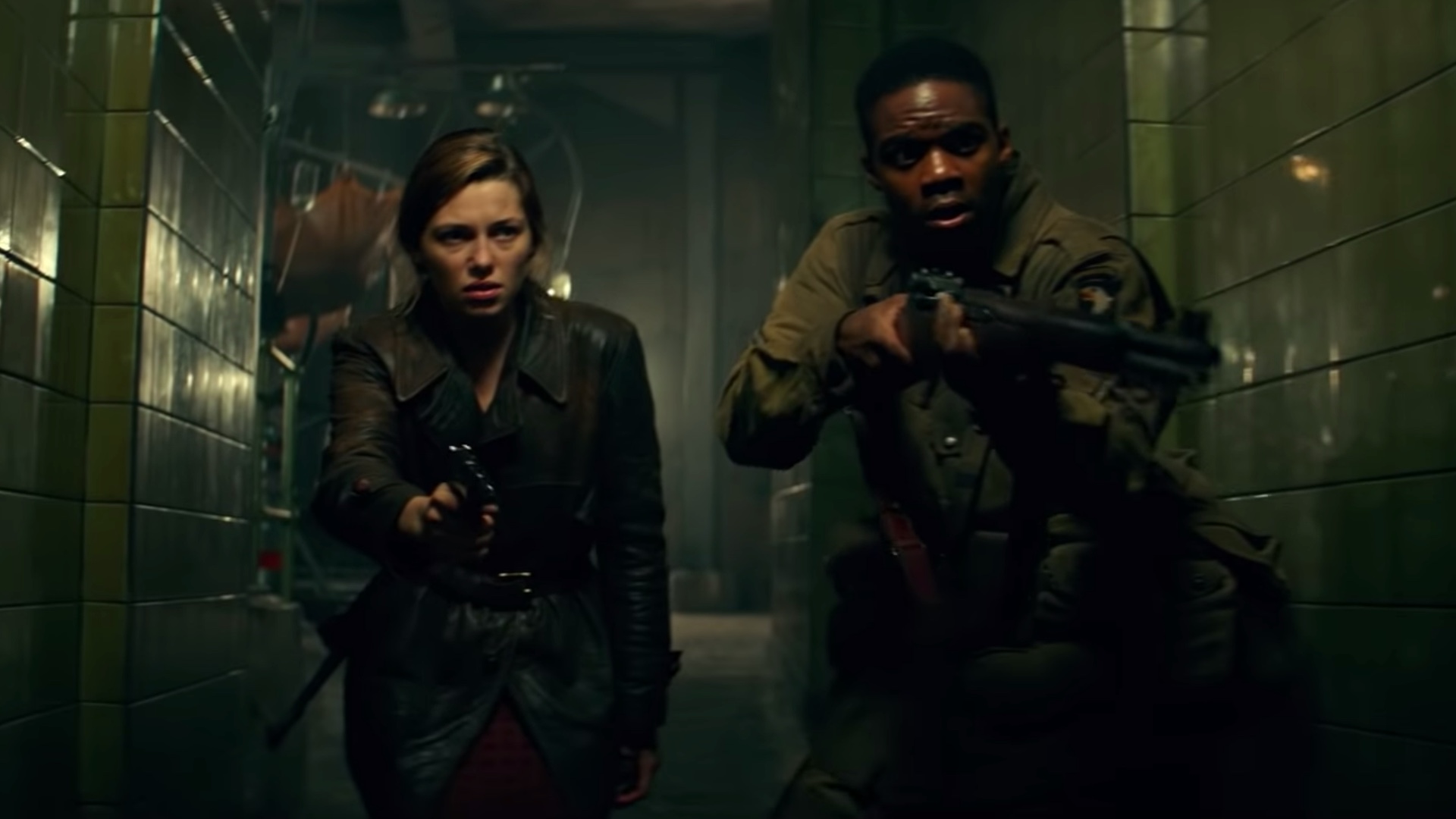
Strictly B-movie and doesn’t attempt to be more. Movie should have been more decisive in focusing on who the hero is. The most affable and intelligent character is the black soldier but the movie doesn’t want him to be either the leader or the lover, so that despite genre conventions that would lead to the pairing or kiss of man and woman, the film avoids it instead, well, because the woman here is white. The movie tries to be careful about race, but like most well-intentioned movies that tackles race full on or gingerly, it’s not motivated by true understanding, but as a self-reflexive move by filmmakers who would like to convey to the audience how open-minded they are. What one gets, and we have seen this over and over again to the point of exasperation, is multiculturalism without race. Yes, he is black, but there’s no history attached to his blackness, because if it were so, we would have to deal with Jim Crow, primarily, since the movie is set during WW2, and, slavery, which wasn’t that long ago from that time period. The film has the black character explain to the white French character that he was drafted, not expecting to be where he is today. There are no indications of segregated units or racism in the military. The other white dudes don’t express disdain over the blossoming relationship between the two, too. Despite all this, early on, the movie can’t help depict black social death. Note the harrowing scene where the (should be true) protagonist escapes by climbing into a truck of dead (mostly white) bodies. That’s his true social status: to be dead or to be among the dead. Why do I insist on this point? Because those who are revived from death in the film are all white. They have the ability to be reanimated or, for some, rejuvenated, something that doesn’t happen to black bodies in the film. One other thing that has been nagging me is why can’t the black soldier be the leader of the pack? The showdown is really between two versions of straight white maleness: the fascist versus the liberal—is this an early indication of what the next presidential race will look like? The white soldier does one thing truly commendable though when he decides to wipe out all this tainted horrid Nazi alien technology so that even his side will not get it. Nice touch, and it mimics the way the film torpedoes actual racial history, among a few things. We can enjoy things, life, Americana, baseball, as long as we don’t bring history and material relations into the picture into our collective B movie lives.

#2019 #34

The good immigrant

Border (d. Ali Abbasi)

A good immigrant knows how to police themselves in their new country

It’s a mixed bag. It features a potentially outrageous sex scene for vanilla folks that del Toro couldn’t show in his Shape of Water. But, it’s really quite tame for my tastes, way too hetero, despite the switcheroo, way too white, despite the heavy make up. (Currently reading the new Marlon James book and I’m not sure if I like it or understand it but when it comes to sexuality, it’s far more imaginative and varied than what is offered here.) It’s exciting to watch if one has been paying attention to the rapid acceptance of the diversification of gender, gender roles, and sexualities in many parts of the world. Ditto, ideas regarding ecology and (self-)sustainability. But if these outsiders are also stand-ins for immigrants or the landless, then the allegorical operation falters, badly. That’s because the film makes a simplistic dualism between those who identify with human and those who do not where the latter engages in vengeful (in)justice. Yeah, humans are vile, according to the movie, but so is the non-human, and this is where I have an issue with the movie because the immigrant figure is justified in acting out negatively which means immigrants are “negative” figures. One doesn’t have to formulate a group of people like that. There’s a line thrown in to ease the more human identifying viewers, but it doesn’t ring quite true because, well I don’t know about you but, I was rooting for the inhumankind. It’s a very curious Sweden too despite the immigrant sounding name of the director: there are no immigrant faces in the film as if the border inspection was so precise that they could only let in the good kind of immigrants, those who make nice little genre busting films but not too radical because to go that far would mean loss of funding.

#2019 #31

Becky vision

A Quiet Passion (d. Terence Davies)

She didn’t write about the horrors of slavery

It’s not that I don’t like it or that I don’t care much for it because I do, however, it’s also deeply problematic and is no different, ideologically, from recent films about the American past and it’s grip-like insistence that only white trauma matters.

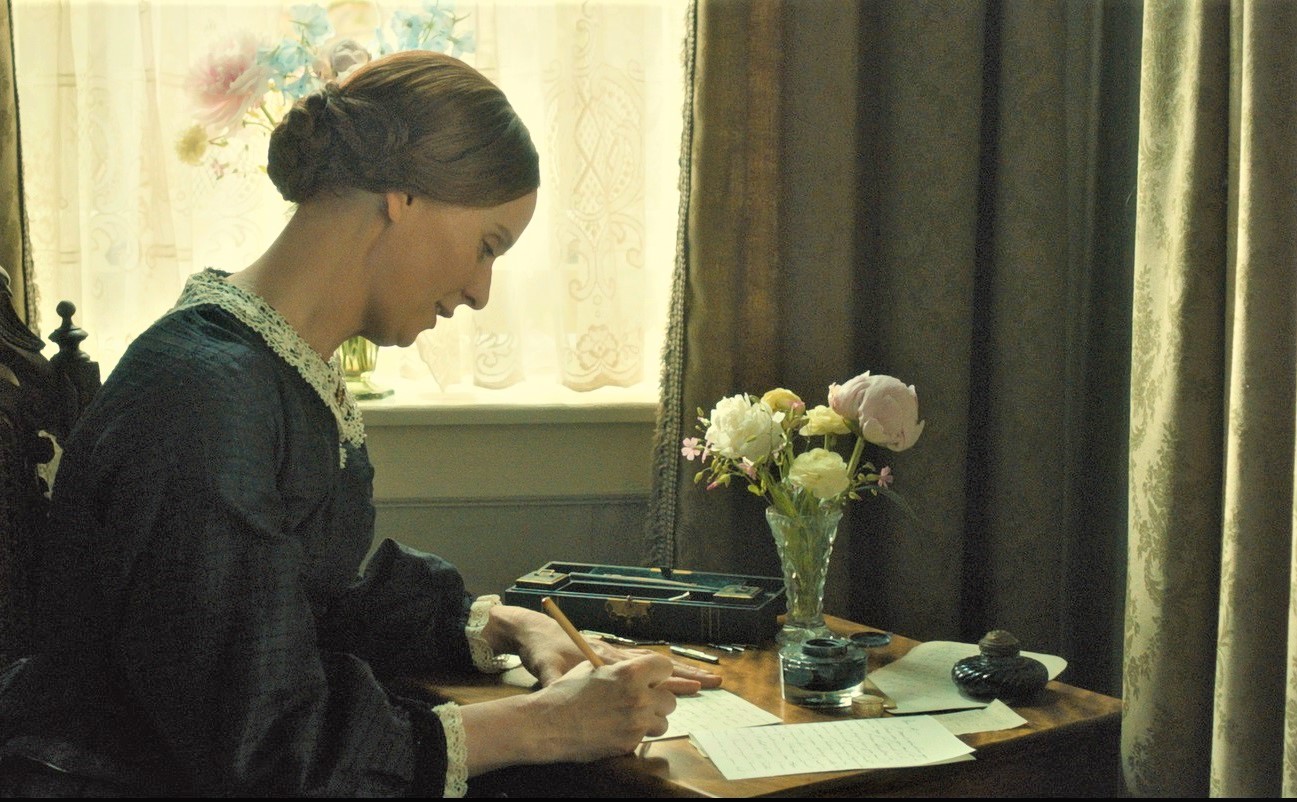
Davies, a deeply Catholic fella whose faith informs his films, treats Emily D. as a saint. It’s refreshing to see the poetess represented as catty, witty, Unsexed in the Prairie. What’s un-refreshing and recycled is Davies’ journey of redemption in his work where suffering begets liberation and desire, unrequited, frustrates the soul to its deepest depths. It’s not the most comfortable sequences, the way Davies renders of physical bodies in pain. Back in the day, consistency of artistic themes and stylistic ticks were referred to positively as auteurism. These days, I prefer to call these things white privilege as most white filmmakers never seem to unlearn or inspect their privileges and racialized imagination.

Davies shows Emily D. as woke when it comes to slavery. But it’s also the same Emily who equates her gendered status, as a white woman, to slavery. Excuse me, Becks but, really? Really? And then there’s that line towards the end where she goes “why has the world turned ugly?” based upon her brother’s infidelity. Well excuse me, Becks, but the world, and your world, in particular, has been especially ugly. Isn’t it also interesting that she and her family are constantly holed up in their nice prim house where we conveniently don’t see any slaves or ex-slaves or any labor for that matter. Once, “employees” of the house are shown, and Emily ends up apologizing to them. How very Roma (that patronizing film about the indigenous help)! Isn’t this the same scenario as Beguiled, where white women are holed up in a house and where the film just avoids the topic of slavery altogether despite set in the South at that time period?

While Emily D., like an Austen heroine than the Bronte sisters that she mentions and obviously admires, wrestles her personal and ethical questions, I kept thinking what about the suffering and ethical entanglements of others, especially enslaved women, where are they? Why don’t they get screen time. Even though the film sensitively and poetically shows us the life of a great American poet, sometimes we want to see the heroic or perhaps not so heroic undertakings of American nobodies.

#2019 #30

White adjacency

Shirkers (d. Sandi Tan)
Minding the Gap (d. Bing Liu)

Loving white men

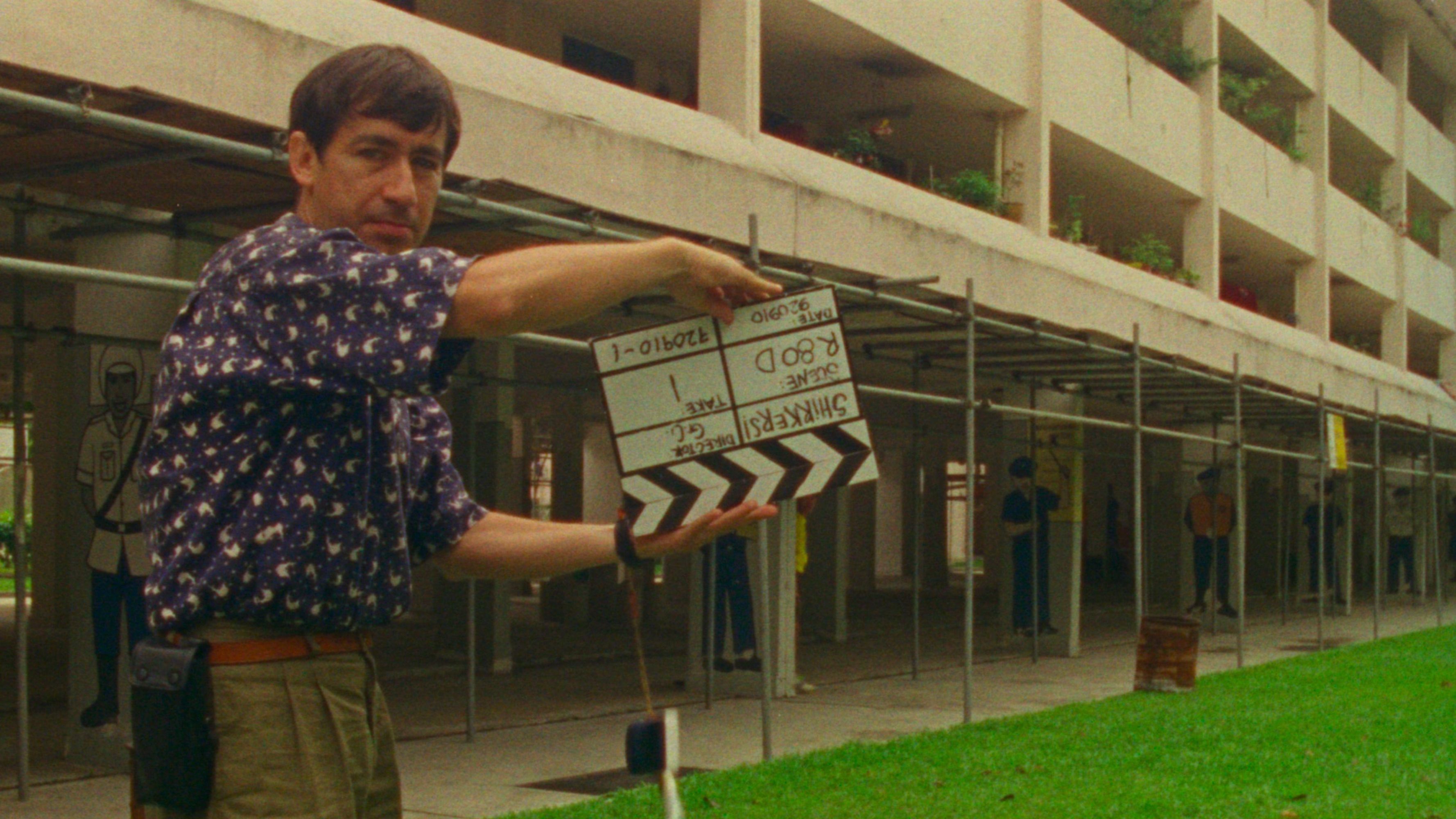
What a disaster. Filmmaker is Singaporean and presents herself and friends as culturally Western, which is fine except there are only the most minimal references of her own culture as Chinese-Singaporean and the most fleeting of visual registers of other ethnicities that make up Singapore. It’s a willful erasure. Shirkers is about desiring whiteness, to be white, to be culturally white, and to be legible to white audiences/people. I honestly thought this type of “colonial mentality” (a term used commonly in the Philippines for this type of thinking) was a uniquely Philippine phenomenon, especially among the slightly upper middle class or the wannabes, exactly the same demographic of Sandi and her pals. Why do you have to do that? Asian hyphenated identity is robust these days. Perhaps it’s because they belong to a slightly older generation? But then you look at another doc by an Asian American twenty year old and it has the same problem of having difficulty enunciating one’s ethnicity. In the celebrated Minding the Gap, not once does he mentions Asian or Asian American and, oddly, focuses on a white protagonist. It turns out that the director himself has an interesting familial history of his own that, because he focuses his energies on his white pal’s, he ends up under-exploring his own story. This lack, this strategic move, ends up being a boon for him as critics have given accolades to the film. Asians, Asian Ams, hyphenated Asians, what’s going on? Why are you still sacrificing yourself for white acceptance? Why are you buying into model minority myth? This is especially true for Shirkers because that’s the other underlying message of the film, those who follow this mainstream American way, where you minimize your ethnicity for white success and approval, will earn you the ultimate goal, whiteness itself. Look where the major figures in the movie are now. I suspect that some Asian Ams are more politically aware than these people but it’s the more palatable to white audiences who are getting the book deals, films being distributed, and docs broadcasted or streamed. The title of the doc is telling, it really shirked from going deeper into a) why they trusted the White Man b) didn’t question their basis of cultural fluency and c) being “Asian” in the 21st c.

White-centering doc by Asian Am filmmaker

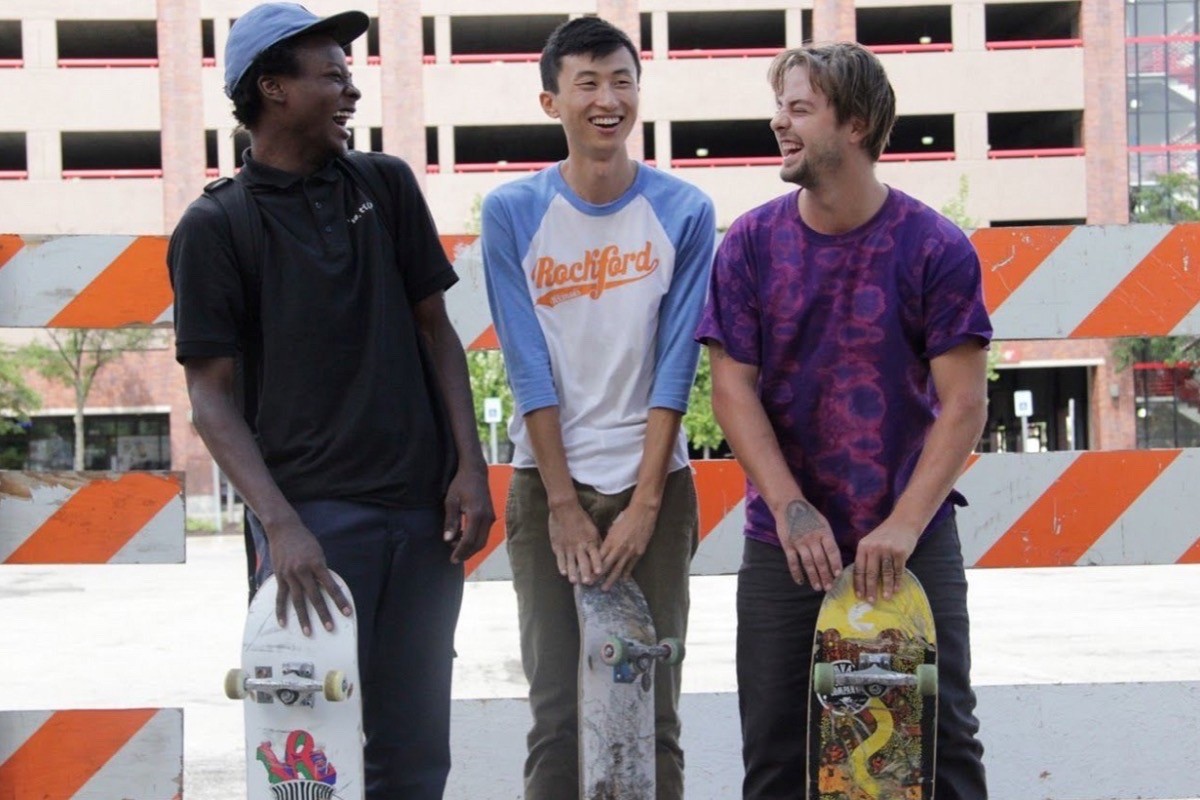
Minding the Gap is a documentary, with its earnestness and mainstream sensibilities, that is probably fit for PBS. Filmmaker goes back to his hometown and follows up lives of his mates, a white and black guy. What I really find odd is how the work ultimately centers on the white figure. The film could easily center on the black friend. Or, in an act of self-confidence, center your life as Asian American. The term is never ever mentioned even though race talk occurs and is pointed out by his black friend. The film is a wasted opportunity to show or give voice to a specifically Asian American experience. Doing so doesn’t negate any other racialized experiences, but what is lost is the specific texture of Asian, Asian immigrant, or Asian second generation life. I understand that the director didn’t grow up in a particularly multicultural society, but to not see your life experiences as enough material for a documentary makes me sad. Why do you need to have a particularly strong white presence for bits of your life to be told? This isn’t the Asian America that I know but it’s the kind, the one where race is erased or where it’s close enough to whiteness that race isn’t mentioned less it makes a lot of people uncomfortable, that is also being popularized: To All the Boys I’ve Loved Before, Andi Mack, etc. Ultimately, the lesson is to scrub away one’s racial specificity to become American. What a tired old trope.

#2019 #29 #5

French autuers so white

Nocturama (d. Bertrand Bonello)

White vision of what multicultural Paris is like and it’s cliche-ridden as expected

Pretty dumb for a wanna be smart ass movie. So hey, you know about French auteur-ist cinema? where white Parisians, usually hetero, talk, fight, make love, philosophize in chic Parisian apartments? Well this is one of those, except that we’ve got a multicultural cast. Finally! It aims to reflect the diversity of Paris and France, something you don’t see at all in those other movies. But wait! These teenagers…turn out to be wannabe terrorists? What I’m saying is this: finally you’ve got a multi-ethnic cast but they’re fucking criminals? Seriously? And what does one of the ethnically Arab teen say? He believes that he’s gonna go to Paradise after death? What? So he’s a radical Muslim too?!? But there are white teens in the gang thus the film couldn’t possibly be racist. Even there, film cannot but help privilege the white straight male protagonist. First, everyone’s death is shown, coldly. The white dude? His death is offscreen. We get to his slumped body, but not his face, unlike girl, whose face we can gaze at. Clearly the director is in love with her, she got more sympathetic screen time than the other girl, who may be of Magrebhian descent. The most sympathetic and earnest character, the youngest in the group, who is of African descent, gets shot right before us. Next, of all the kids, the white dude gets to say goodbye to his mom! Aww! (In a quizzical move, same character invites homeless into their capitalist fantasy playground hideout—as a sign of his humanity. Huh!?! He also found time to a) wander about the city when his pals were holed up in their hideout and b) had time to make love, oh la la!) What I’m saying is that the white protagonist is accorded a humanity that isn’t extended to the other characters which is why this film, pretending to be saying something politically, is nothing but the same tired mainstream way of thinking about youth, rebellion and race. There’s an extended lip synching scene in the movie: the movie isn’t the real thing but a carefully practiced rendition of received and stale ideas. Naturally, the movie also ranked high in the 2017 film polls.

#2019 #28

Fuck this movie

Good Time (d. Safdie Brothers)

Went as far as sexualizing an underage black girl

Reprehensible. These guys are supposed to be the next big thing. Film ranked number one in the Film Comment 2017 poll. They think they’ve made a pretty cool loser heist movie with auteur vibes. And then you watch it. Right from the beginning, it’s filled with black figures who are used as props. It doesn’t stop with the dehumanization of black people, including a thwarted underage sex with a young black woman. The film uses black bodies to signify its cool factor by making them act stereotypically and to prop up the white protagonist’s character development. Can’t help but compare it to recently viewed films that aims to portray fully fleshed out black characters and their relationships, in Beale Street and even the female heist movie Widows. There’s none of the humanity here because that doesn’t suit the fulmmakers’ intentions. So what do they intend to do? White losers are cool. Messed up white losers love their messed up bros. There’s an extended monologue about one such loser’s eventful day that is supposed to be hilarious, but with what else is going on, it’s who the fuck cares. The worst sight in the film is seeing a young black man being framed for a crime he didn’t commit with no awareness of what that means. It’s also kind of played for laughs since he reverts to his mother tongue which the cops don’t understand. His dehumanization is complete. It’s a horror film moment passing off as comedy in a white supremacist film. White women don’t come out good either. The only one that’s given a few lines is a hysterical loser cougar. How could critics not see this ugliness? This laziness? This absence of reflection? Because they think the same way as the filmmakers. The film is racist (and sexist) as fuck, and by conclusion so are the huge majority of film critics working today who can’t seem to see what they’re looking at.

#2019 #27

Design a site like this with WordPress.com
Get started