Wanda (d. Barbara Loden)
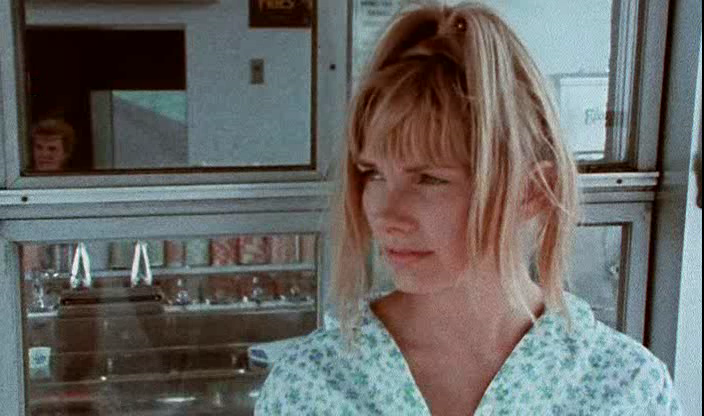
It’s interesting that the newly restored film feels like a missing link to the era and 70s American cinema. Though it plays out like a low-key low budget Bonnie and Clyde, Loden isn’t interested in that kind of Hollywood glamour or violent spectacle even though the protagonist tries her best to be presentable at one point. What’s amazing about the film is the way it captures her in the midsts of a kind of an Americana (white obviously) that reflects the economic state and might of the country at the time despite intimations of decline and obsolescence: coal, garment industry, local malls, small town Main Street, the immigrant (Mexican?) section of town, etc. She appears simple-minded but she’s also shown thinking constantly as the camera gazes at her steadily as part of the landscape described above. I don’t think I’ve seen this kind of regard for a female figure who is deep in thought whenever the camera is on her since the Dardennes’ Rosetta, which the film bears some resemblances. It’s also a portrait of what it means to be alienated from American culture as a woman who economically, culturally, and socially disadvantaged, and, more importantly, who dissents in her own way all that the reality offers her. Her abusive male companion wonders if it is death that she wants. It’s not death and it’s not something more either, but something different. Is it feminism? Is it social activism? What is it? It’s this articulacy of representing her inarticulacy that is an achievement of sorts. Ultimately, does Wanda know or is it more important to show that she’s preoccupied with something as she munches on a true red white and blue American hotdog.
#2019 #51
 Orpheus in Hell: Unlicensed Film Reviews